Hair loss from hair care products!?? What you should know.
Written by Bella Wagner (one of our SciComm Cohort graduates!) based on the latest The Eco Well Podcast episode with Cicely Shillingford PhD.
A Quick intro from Jen
Is hair care really the cause of hair loss that a lot of people attribute it to be? How does this vary, and how do hair care brands navigate this so that this isn’t a problem? My latest podcast episode featured a conversation with Cicely Shillingford PhD, hair care product developer and cosmetic chemist, to help us navigate the topic. This blog post contains a quick summary of the points covered, written by Bella Wagner. For loads more, be sure to tune into the episode associated with this post!
HAIR LOSS FROM BEAUTY PRODUCTS???
Hair loss is an incredibly complex process that is multifactorial and individualized. In order to start understanding how hair care products may be involved in hair loss, it helps to first ground yourself in what’s all involved in hair loss in general.
Spoiler alert: it’s usually not hair care products behind the hair loss.
WHAT CAUSES HAIR LOSS?
Hair loss, or alopecia, is due to an interruption in the body’s hair production cycles and can occur anywhere on the body. There are many types and causes of hair loss.
ANDROGENIC ALOPECIA
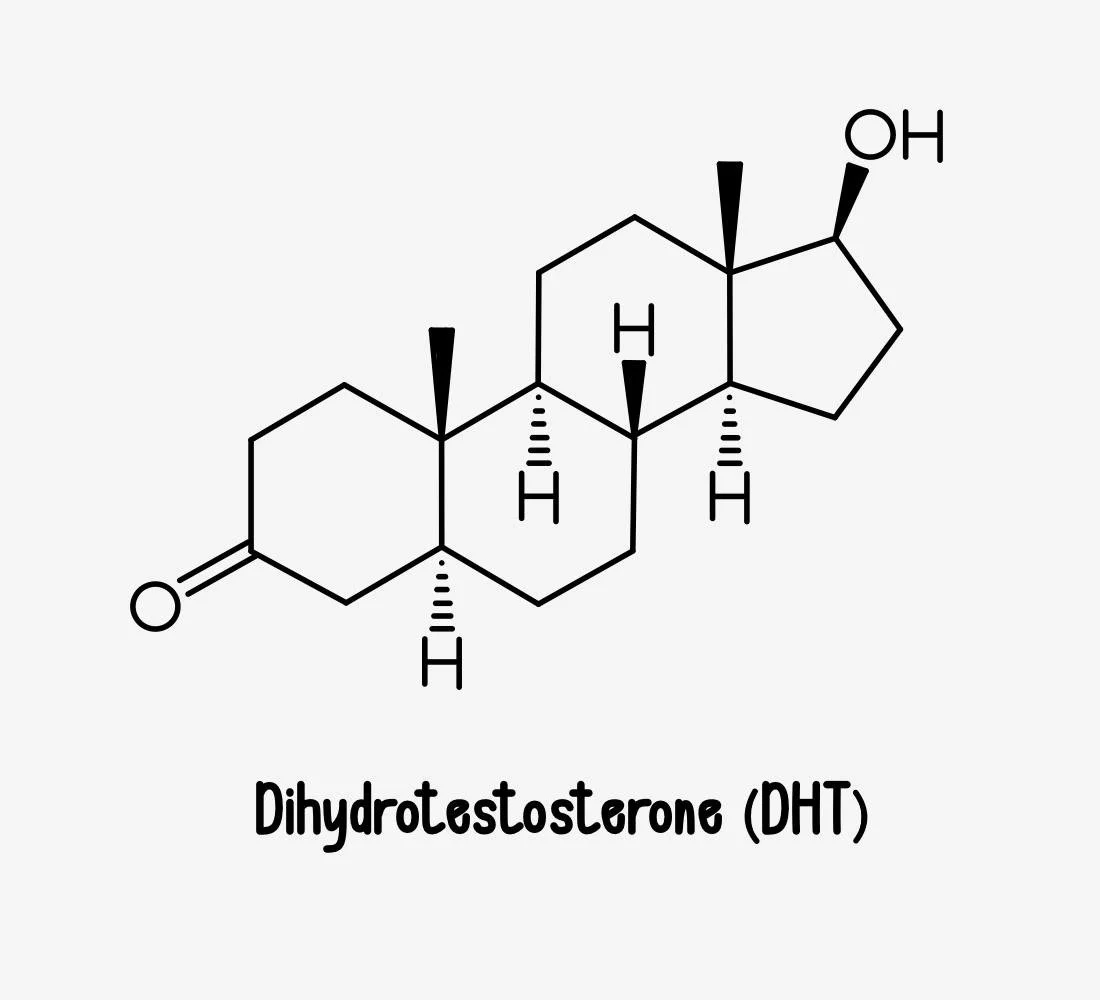
Androgenic Alopecia, or pattern hair loss, is the most common type of hair loss in men and women.(a) This type of hair loss is related to, as the name implies, andogens, which are a category of sex hormones. Males naturally make more, but everyone has androgens, the most common being testosterone.(b)
In this type of hair loss, the hair follicle experiences heightened sensitivity to testosterone and testosterone derivative compounds, resulting in hair loss over time. The typical culprit is the testosterone derivative, dihydroxy testosterone (DHT).
As a consequence, the thicker hairs on the head become increasingly thinner and more similar to the hair on the face (called vellus hair). Eventually, the follicle can stop producing hair all together. In female pattern hair loss, the hair line usually stays intact, but there’s diffuse thinning across the entire scalp and the hair part widens. This is measured by the Ludwig Scale.
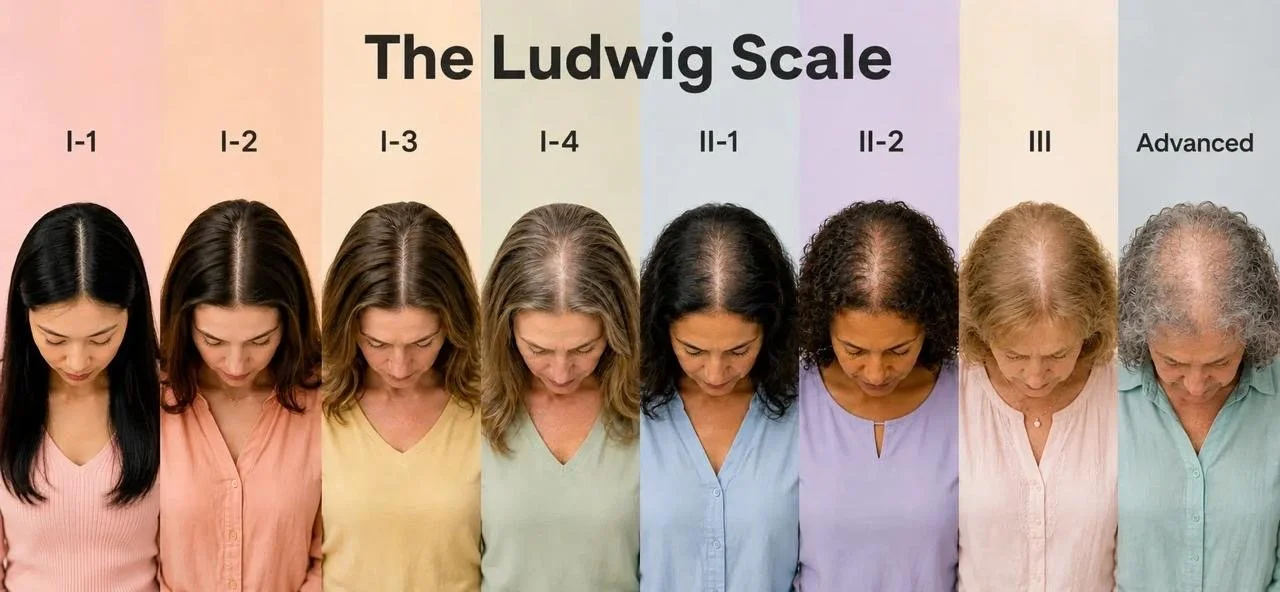
Photo Credit: Dr. Serkan Aygin Clinic
A lot of women with polyendocrine metabolic ovarian syndrome (PMOS), previously called polycystic ovarian syndrome (PCOS), experience androgenic alopecia. This is because excess androgen production is one of the causes of PMOS. It is estimated that 10% to 13% of women worldwide have PMOS.(c) Androgenic alopecia has NO relation to cosmetics.
TELOGEN EFFLUVIUM
This is temporary, stress-induced hair loss and is the second most common cause of hair loss for women. When there is a stressful event, the body turns off non-essential functions for survival. Hair is a non-essential function.
The hair cycles through four phases:
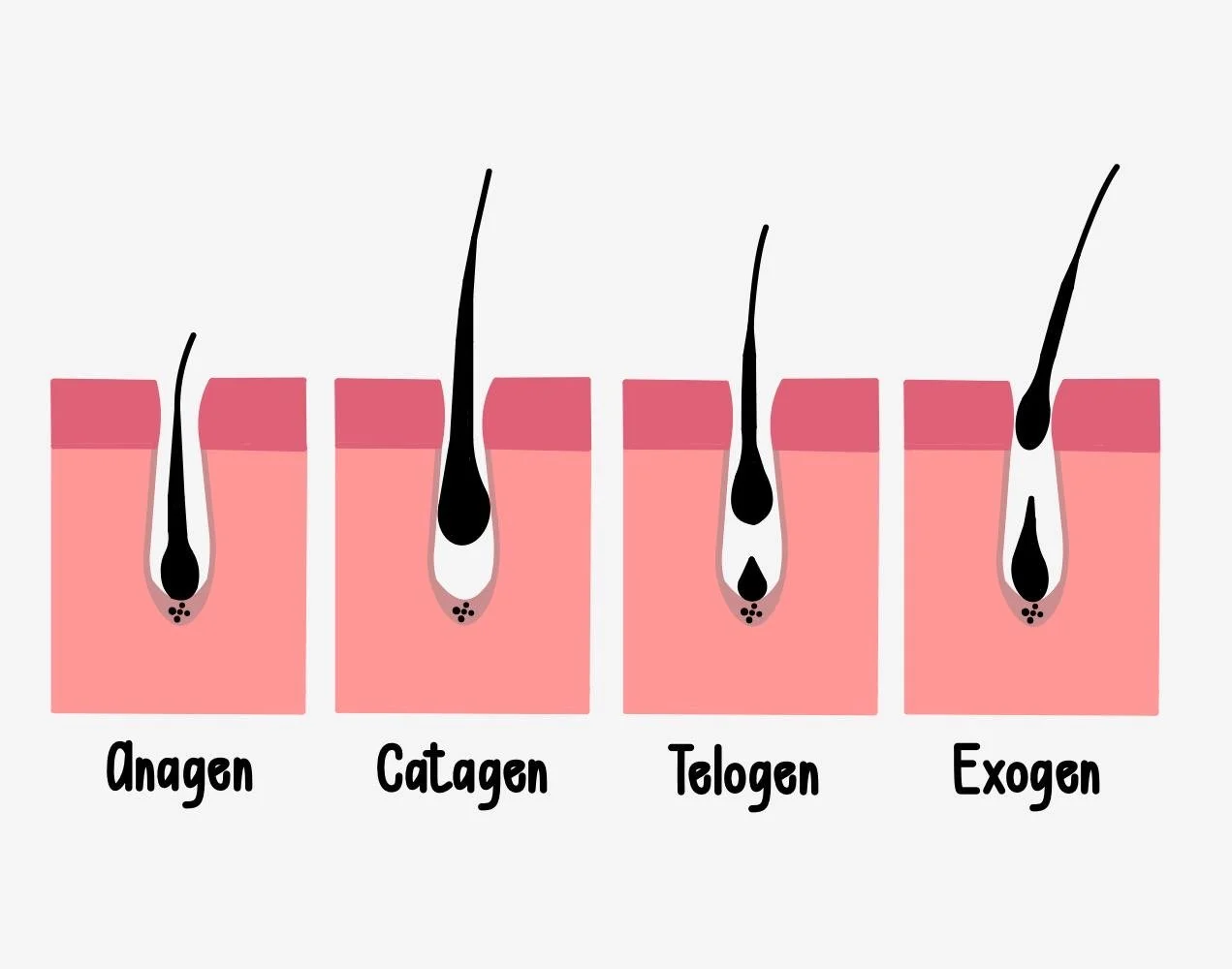
1. Anagen: The Growth Phase - The hair follicle is producing hair cells and the hair lengths.
2. Catagen: The Transition Phase - Hair growth slows and the hair follicle shrinks. The hair detaches from its blood supply.(d)
3. Telogen: The Resting Phase - New hairs form in the follicle, beneath the detached hair.
4. Exogen: The Shedding Phase - Overlapping with the Telogen Phase, old hair is shed as new hair forms. The Anagen Phase restarts.(h)
Generally, most of the hair is in the Anagen Phase. 5% to 10% is in the Telogen Phase. When a stressful event occurs, more hair ends up in the Telogen Phase and, subsequently, the Exogen Phase. This increased shedding is telogen effluvium.(e) Within several months of the stressful event’s end, telogen effluvium typically ceases.
While a cosmetic is an unlikely culprit behind telogen effluvium, it’s not a stretch to see how stress caused by headlines about someones favorite hair care product causing hair loss could contribute. A further discussion is in the next section.
NUTRIENT DEFICIENCIES
This is the third most common cause for hair loss in women. Iron and vitamin D deficiencies are the most common. Without the necessary nutrients, the hair growth cycle can be disrupted and the hair can become brittle and weak.
POOR SCALP HEALTH
Your scalp environment also has a big hand in hair loss, since the hair is anchored to your scalp. A poor scalp environment can cause poor hair anchoring, which can cause increased shedding and could even disrupt your hair growth cycle.
Lot’s of things can cause disruptions in your scalp environment, such as:
Oxidative damage from pollution.
UV damage from the sun.
Allergies causing skin reactions like allergic contact dermatitis.
LESS COMMON CAUSES
Alopecia areata, which is an autoimmune disease caused by the immune system attacking your hair follicles.(M)
Psoriatic alopecia, which is caused by psoriasis.(N)
Traction alopecia, which is caused by a lot of tension on the hair follicle. This is often due to tight hairstyles like ponytails or braids.
Scarring alopecia, which is caused by the destruction of the hair follicle. This can result from infections, harsh chemicals, and burns.(G)
This was only briefly discussed in Dr. Shillingford’s podcast discussion, which was coming at this topic more from the product developer POV. For an in-depth discussion about hair loss, it’s causes and management, be sure to tune into the podcast episode Jen had with dematologist and alopecia specialist, Dr. Leona Yip MD PhD. Find that episode here!
TELOGEN EFFLUVIUM & COSMETICS
Consumer opinions on what’s causing hair loss may not be related to what’s actually causing the hair loss.
Imagine: you’ve been using a cosmetic hair product for some time. Then, you see someone online saying this cosmetic hair product causes hair loss. This causes you to worry about whether the product is causing hair loss for you. That is a stressful event! And what can happen when we get stressed: telogen effluvium.
Let’s take it further: your increased worry over hair loss causes you to become more attentive to your hair shedding. With this heightened awareness, you notice shedding more and more. As a result, you become more stressed. This increased stress actually contributes to hair loss and reinforces your worries. This cycle then repeats.
The reality is: hair loss is complicated. This scenario has not even mentioned the countless other causes of stress in everyday life. With so many potential causes, blaming a single product is too simple. The noise around this topic sparks fear and confusion, especially when it comes to class action lawsuits. Frequently, the complexities of hair loss are lost.
This isn’t to say that hair care products are never behind hair loss. For example, if you have a sensitivity to a certain ingredient, that can impact your scalp which can translate to hair loss for some people. Someone somewhere will be sensitive to just about any ingredient that may end up in cosmetics; it’s usually the minority, and brands try to take this into account during product development (e.g. rates of sensitives, % of ingredients, testing for this kind of thing with their final formula, etc - more on this shortly!). The reality is, it’s almost impossible to make a product that will be well tolerated by every single person. BUT, this potential cause for hair loss would be more the exception than the rule, and highly uncommon.
HAIR LOSS & CLASS ACTION LAWSUITS
A number of class action lawsuits alleging hair loss have garnered heavy media attention. As alarming as they seem, the question still remains: do these claims hold water?
Let’s examine two notable class action lawsuits:
CHAZ DEAN’S WEN CLEANSING CONDITIONER
In November 2015, more than 200 women filed a class action lawsuit against the haircare brand Wen. The lawsuit and plaintiffs alleged that the Cleansing Conditioner caused severe hair damage, including hair loss, hair thinning, hair discoloration, and rashes.(I)(J)
In response, WEN initially stated:
“There is no scientific evidence to support any claim that our hair care products caused anyone to lose their hair. There are many reasons why individuals may lose their hair, all unrelated to WEN. We intend to vigorously contest the allegations made.”(I)
Mediation began in December 2015.
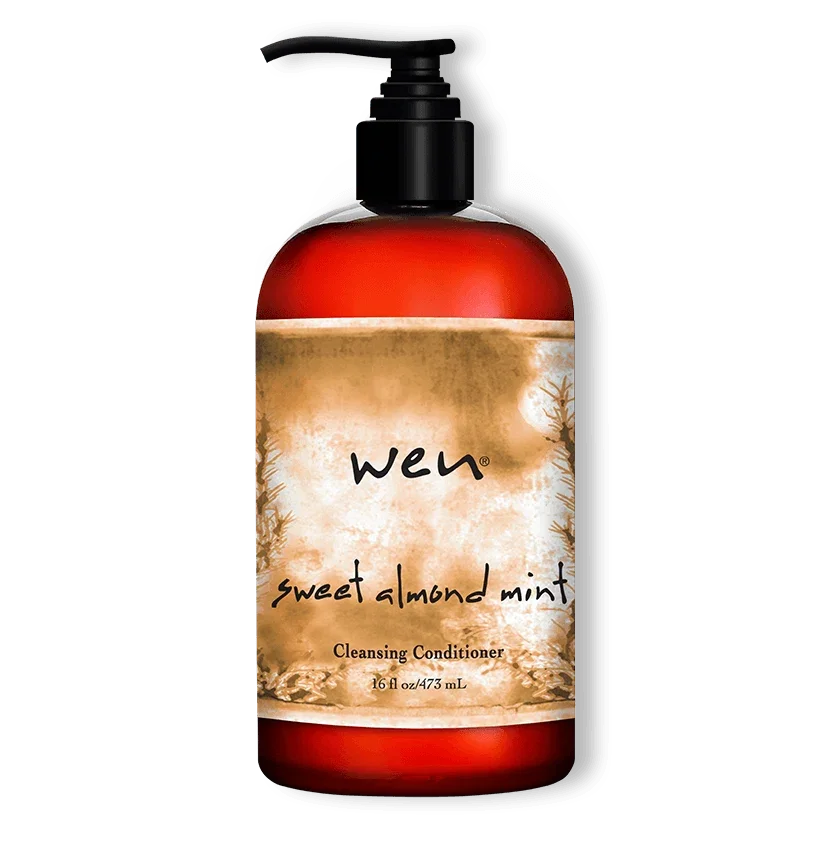
The product claimed to “cleanse your hair without the use of harsh detergents or chemicals.”(L)
A proposed explanation was that the product was only conditioning and NOT effectively cleansing the scalp. For most, cleansing the scalp is necessary to maintain a healthy scalp environment that is free of debris and pollution. Using a product that doesn’t clean the scalp well might ultimately lead to a poor scalp environment → worse hair anchoring → hair loss? Hard to say whether this is actually the reality based on the current information available. It’s also possible some of the women in the lawsuit were experiencing hair loss from other causes, and the timing of the lawsuit was a compelling explanation for their problem. This was the view point of a dermatologist interviewed by People Magazine who felt the photos in the lawsuit were more typical of female pattern hair loss.(K)
Ultimately, Wen chose to settle for $26.25 million in October 2016, stating:
“Wen by Chaz Dean is safe and we continue to provide our hundreds of thousands of customers with the Wen by Chaz Dean products that they know and love. Since the process of litigation is time consuming and costly, we made a business decision to pursue a settlement and put this behind us so that we can focus on delivering quality products.”(K)(O)
Most brands do not want to spend millions on legal fees and trials. And so, they settle. Settling a lawsuit is not an admission of guilt; to the public, however, it may seem so. The noise created by these suits, even if they do not hold water, can be incredibly damaging for a brand.
OLAPLEX
In February 2023, 28 consumers filed a lawsuit against Olaplex Holdings Inc. for false advertising. The suit claimed that Olaplex products did not restore damaged hair and create “strong, healthy-looking, more resilient hair.” Instead, Olaplex products allegedly contained allergens and irritants and caused hair and scalp injuries, including rashes, dryness, and hair loss.(P)(Q)(R)
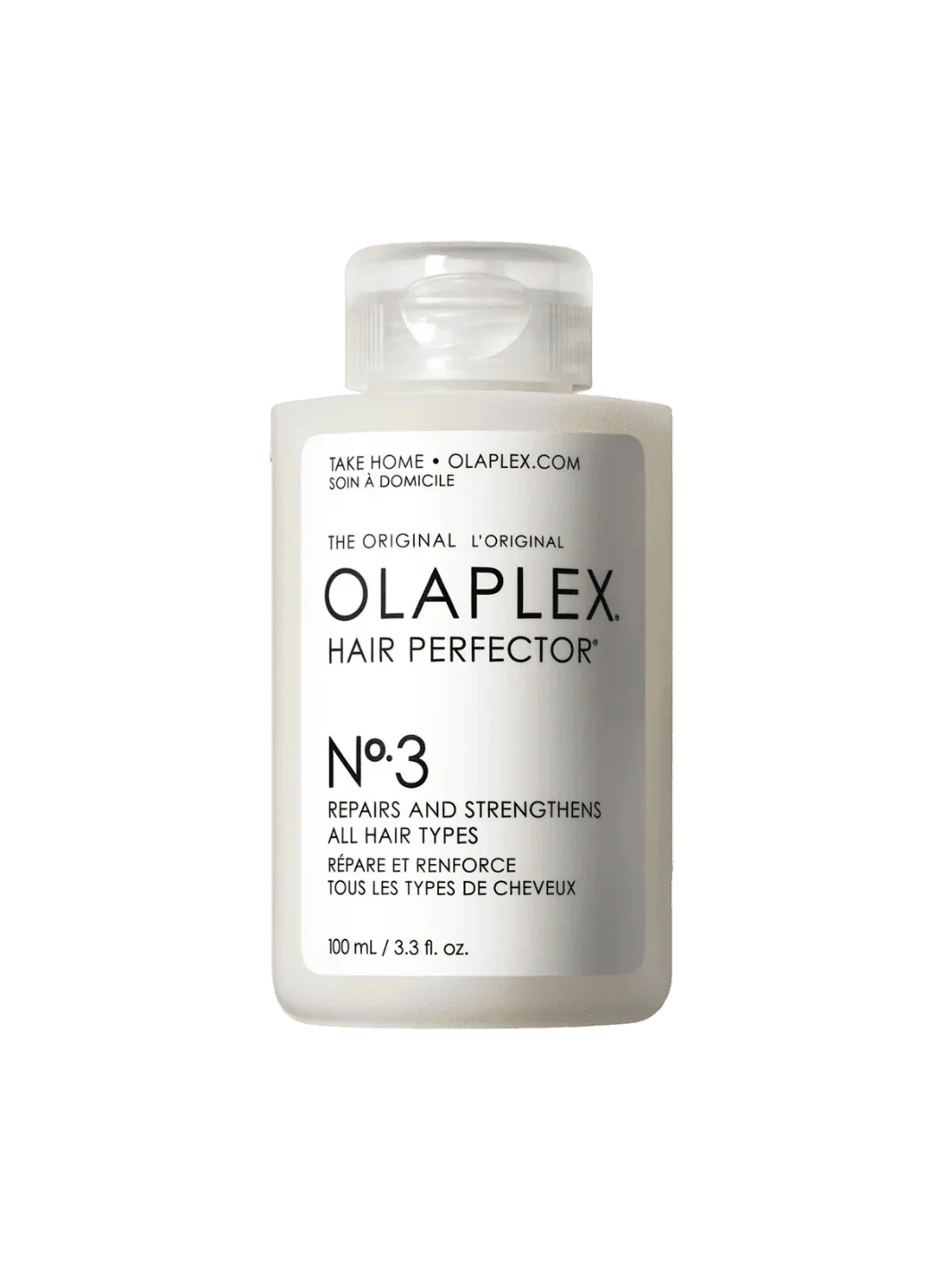
In response, Olaplex released third-party safety testing results on all of their products and stated:
“There are a wide variety of reasons for hair breakage or hair loss, as medical and scientific experts have publicly stated, including lifestyle, various medical conditions and medications, the aftereffects of Covid, skin conditions and more.”(Q)
What could be causing the negative hair outcomes? The lawsuit poses the presence of Panthenol as a reason. This ingredient is derived from vitamin B5, and is ubiquitous across the haircare category, with various brands is panthenol as a key ingredient. The ingredient is known to smooth and strengthen hair. It’s HIGHLY UNLIKELY that panthenol would cause hair loss, and there’s no evidence to support that the ingredient is a culprit for hair loss
Some speculated that the negative hair outcomes may have been related to users not following the product usage instructions. Specifically, using the products more regularly than the 3x/week brand instructions, and using them as a leave-in product (R). There is a lot of consideration put into product use instructions so that users will get the best results with the least risk.
Whatever was going on here, and whether Olaplex products were even a problem to begin with, in July 2023, the Court dismissed the lawsuit without prejudice.(S)
THE REAL CONSEQUENCES OF CLASS ACTION LAWSUITS
These lawsuits have cascading impacts for the entire industry. They entrench beliefs into the marketplace that, ultimately, increases the cost of business and of finished products themselves.
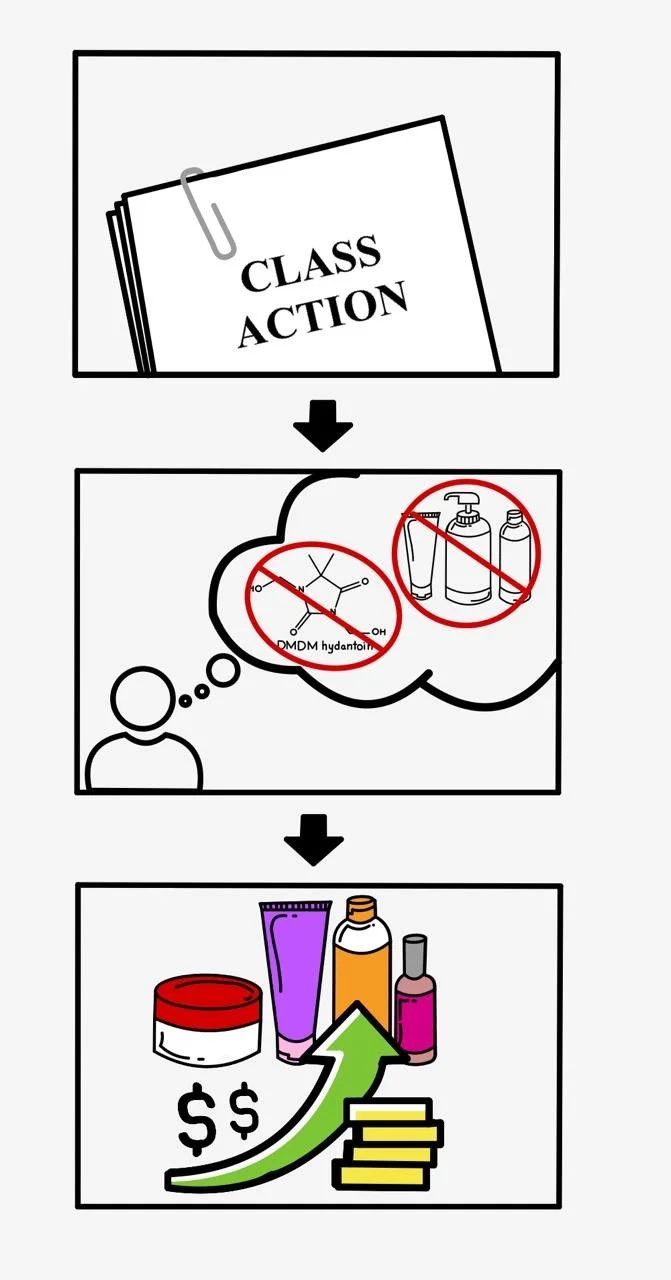
A primary example of this increased cost of business: insurance rates and availability. Because of the rising risks of class action lawsuits in the US, especially related to using specific ingredients, product liability insurance costs are now much higher. And if you use some of the "controversial” ingredients? It might be a non starter - insurance companies may refuse to insure the product. For brands, it would be a huge business risk to have a product on the market without product liability insurance.
As class action lawsuits increase in number, more and more ingredients become associated with negative outcomes (making their use increasingly uninsurable). Despite there frequently being little evidence that these ingredients pose a safety problem, public opinion sours. This drives brands to remove these ingredients and shrinks the list of what formulators can use.
The perfect case study for this: formaldehyde-releasing preservatives. From the 1970s through the early 2000s, formulators relied on highly effective options like parabens and formaldehyde-releasing preservatives. Despite what you may hear in the media, these preservatives are well supported to be safe in the specific formulation contexts they’re used in cosmetics. The amount of formaldehyde released in a full cosmetic product is less than what you would get from eating a pear. Of a single breath when you exhale. However, due to fear and noise, they’ve fallen so out of favor that states like Washington have taken it upon themselves to put a state ban in place for these preservatives.
The risks of preservative bans, especially when they’re directed towards well-supported ingredients, is far from innocuous. It’s now more challenging for cosmetic chemists to keep microbes out of their formulations across their shelf lives. Microbial contamination is literally the biggest health risk related to cosmetic products. E.g. people can die or go blind from a contaminated product. A poorly preserved product is an unsafe one…
For an in-depth overview of formaldehyde-releasing preservatives, Jen recently hosted a roundtable discussion to get into their science and safety with cosmetic chemist, Gabrielle Dwyer, and toxicologist, Joe Zagorski PhD. Find that episode here!
VERIFYING SAFETY OF A COSMETIC PRODUCT ON MARKET
How do cosmetic brands make sure their products are not likely to cause hair loss? Validating the safety of their products is key. By doing their due diligence in vetting their ingredients, critically evaluating their manufacturing partners, and testing their finished formulations, they can build confidence that their products will be safe for their consumers. By ensuring safety throughout the entire product lifecycle, the potential for the product to cause hair loss becomes increasingly unlikely.
What does safety assurance mean for cosmetic companies? As obligated by the Modernization of Cosmetic Regulation Act (MoCRA), the federal law that regulates cosmetics and personal care products in the US, brands must have safety substantiation on file.(T) What goes into safety substantiation extends far beyond the formula itself.
Here is a glimpse at what is considered when verifying product safety:
EVALUATING A MANUFACTURER:
Safety starts with manufacturing. That includes choosing the manufacturing partner and how the product is being manufactured. It is crucial to critically evaluate the standards of your manufacturer.
This means answering questions like:
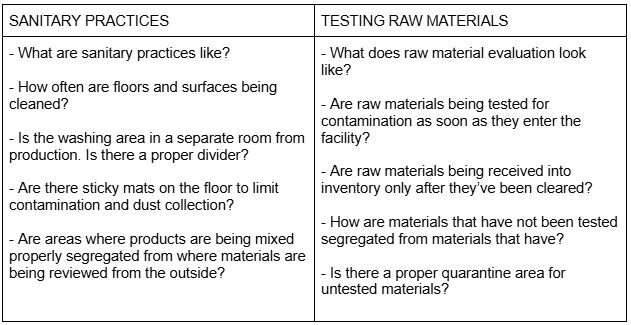
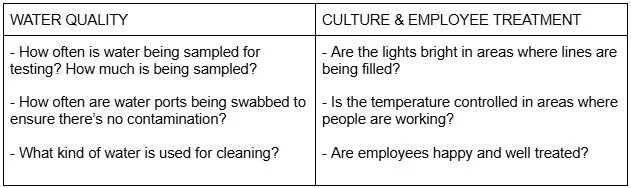
Small brands may not be able to use manufacturers that have these higher standards. Or, they might not be able to critically evaluate the safety of a manufacturing process.
PRODUCT TESTING:
The testing a product goes through will depend on many factors, including the product type, the desired claims, the regulatory landscape of the region(s) the product is to be sold, and more. There are some standard tests:
Preservative Efficacy Test (PET): A product is inoculated with bacteria, mold, and yeast to ensure the preservative can kill these contaminants over the course of 28 days. Additional microorganisms may be added to the study depending on what is typical in the particular regions the product will be sold in.
Analytical Testing: These test for the presence of certain compounds, such as formaldehyde, benzene, heavy metals, lead, and mercury to ensure they are at safe levels.
Stability: This challenges the product to higher temperatures over the course of several weeks and months. This makes sure the formula will not separate or undergo change over time.
Human Repeated Insult Patch Testing (HRIPT): This determines whether the product sensitizes skin. The product is repeatedly applied to the skin to see if a reaction occurs. The more participants, the more rigorous (and the more expensive).
A Quick Science VS featuring:
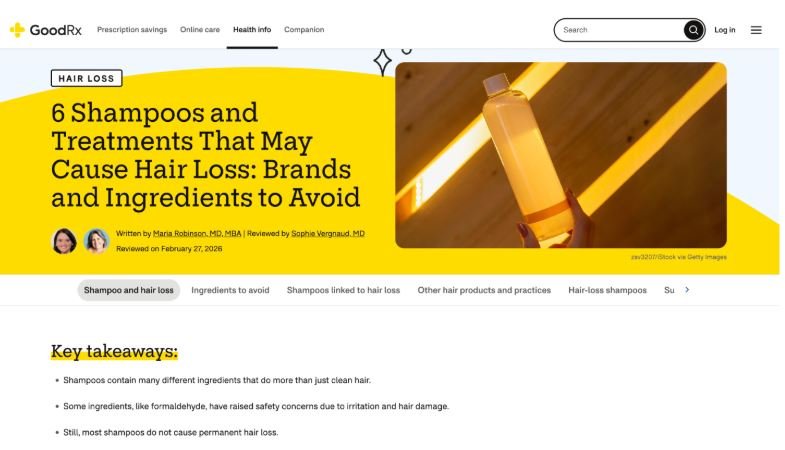
The internet is rife with articles like this, with bold claims linking hair loss to cosmetics, made extra compelling given the source: physicians. While the public often assumes this is a topic they may have expertise in, this really is more a cosmetic science topic. This next section will dig into some of the claims made in this article VS the science.
EXCERPT ONE: DO MORE INGREDIENTS IN A FORMULA EQUAL BAD?
Article quote: “Some shampoos can have up to 30 ingredients, including various chemicals that help with stability and presentability of the shampoo. Each of these ingredients has a specific purpose, but over time, some of them may lead to different problems and health outcomes. As research reveals more about certain ingredients and their negative health effects, they may be removed from cosmetic products.”
The Science? Ingredient count alone says little about safety. Long ingredients lists [often] reflect marketing more than function. The more useful question is: does each ingredient have a purpose and is used at a meaningful, tested level?
The reality is that the risk related to ingredients is all related to their concentrations and how they interact in a formula, which companies would sort out via finished product testing. Ingredient lists will not give you this information.
EXCERPT TWO: DO LAWSUITS RAISE AWARENESS AROUND SAFETY ISSUES?
Quote: “Learning about other people’s experiences with specific products through lawsuits can be informative and help raise awareness around safety concerns.”
The Science? Lawsuits can show that people are having distressing experiences. However, in the case of cosmetics, they rarely contain studies, epidemiological data, or other hard evidence that an ingredient or product caused the hair loss. As we went through earlier in this post, linking a single thing to hair loss is difficult. However, when a plaintiff has an explanation that “fits”, it can be very compelling for everyone involved. The unfortunate reality: lawsuits don’t always, and often do not, match the science.
EXCERPT THREE: IS THE PERSPECTIVE FROM SOCIAL MEDIA, INTERNET FORUMS, & CLASS ACTION LAWSUITS REPRESENTATIVE OF WHAT WE NEED TO BE CONCERNED WiTH WHEN IT COMES TO HAIR LOSS?
Quote: “If you watch social media or read internet forums, you’ve probably come across some people who’ve experienced hair loss after using Native shampoos. So far, there aren’t studies proving this association.”
The article itself concedes that no studies prove the association between Native shampoos and hair loss, yet it still frames the online anecdotes as information worth heeding. I guess it’s worth saying - there’s a lot of misinformation out there. Just because people are saying things on forums does not necessarily translate to merrit for the things being said. And paying close attention to ALL the things people say, whether they have relevant expertise of not, seems like a recipe for unneeded stress… which in itself is linked with hair loss…
FINAL TAKE-HOMES
Question everything. It is never black and white. Look beyond the binary and find the answers that lie somewhere in the grey area!
For consumers who want to feel more confident in the products you use: understand what the brand you’re buying from stands for. Find brands that reflect your values. Look into who the founders and decision-makers at the company are. You can’t expect yourself to decipher every product and that is okay!
For brands: keep learning about how to make your products safer and better for consumers. Publish what you know. Make transparency and safety part of your brand identity.
Big thank you to Bella Wagner for writing this summary, and to Cicely for sharing your knowledge in the podcast this summary is based on. For loads more, be sure to tune into the full podcast episode!
Find the hair loss from hair care podcast episode with Cicely Shillingford PhD here!
References:
(a) https://nyulangone.org/conditions/hair-loss/types
(B) https://my.clevelandclinic.org/health/articles/22002-androgens
(c) https://www.who.int/news-room/fact-sheets/detail/polycystic-ovary-syndrome
(d) https://traya.health/blogs/hair-health/catagen-phase-complete-guide?srsltid=AU7gw4UV_zHAhSmTS3D64XNqfLsWVWNwf6gmAwHRhBZ2xmYdvMSv0o64
(e) https://ishrs.org/telogen-effluvium/
(f) https://charlesmedicalgroup.com/general/understanding-the-parts-of-hair-on-the-head-a-deep-dive-into-hair-anatomy-and-restoration-options/
(G) https://my.clevelandclinic.org/health/diseases/24582-scarring-alopecia
(H) https://www.advancedhair.com/learn/understanding-the-hair-growth-cycle
(I) https://www.kishishlaw.com/wen
(J) https://thenationaltriallawyers.org/article/200-women-file-class-action-law-suit-against-celebrity-hair-care-product-wen/
(K) https://people.com/style/wen-hair-care-lawsuit-hair-loss-photos/
(L) https://www.qvc.com/p/wen-by-chaz-dean-sweet-almond-mint--tea-tree-duo/A188267?colorId=000&sizeId=000&ref=GBA&CID=GGL-SP-GGL%7CSP%7CBrandProductbeautyhaircare%7CBEA%7CPLA%7CX%7CX%7CStatic%7CX%7CACQ%7CX%7CX%7CX&e4=ACQ&e5=PLA&e6=BEA&e7=16368580012&e8=Cj0KCQjwxKfWBhDkARIsAMKwkNbYWeEnPVtpLjhrQ2FfUURTmvf8t_AKucWTy_xsF7dGayS7yEZ5sscaAnSHEALw_wcB&e9=SRCH&e10=PROD&e11=5349761714&e12=201261517404&e13=pla-2007141999013&e17=A188267-000-000&e24=g&e25=gb-0AAAAAD3-fzl2XSxfAxU1hbtp0WOGqpUgH&gad_source=1&gad_campaignid=16368580012&gbraid=0AAAAAD3-fzl2XSxfAxU1hbtp0WOGqpUgH&gclid=Cj0KCQjwxKfWBhDkARIsAMKwkNbYWeEnPVtpLjhrQ2FfUURTmvf8t_AKucWTy_xsF7dGayS7yEZ5sscaAnSHEALw_wcB
(M) https://my.clevelandclinic.org/health/diseases/12423-alopecia-areata
(N) https://health.clevelandclinic.org/scalp-psoriasis-and-hair-loss
(O) https://www.cbsnews.com/losangeles/news/class-action-lawsuit-over-wen-hair-products-gets-preliminary-settlement-approval/
(P) https://www.npr.org/2023/02/16/1157398619/olaplex-lawsuit-hair-loss
(Q) https://www.businessoffashion.com/news/beauty/olaplex-customers-claim-hair-loss-scalp-injuries-in-lawsuit/
TO ACCESS (Q): https://archive.is/awRq4
(R) https://www.refinery29.com/en-us/2023/02/11299948/olaplex-hair-loss-lawsuit
(S) https://olaplex.com/pages/health-and-safety
(T) https://www.fda.gov/cosmetics/cosmetics-laws-regulations/modernization-cosmetics-regulation-act-2022-mocra