Formaldehyde in cosmetics!? What you should know.
Written by Bella Wagner (one of our SciComm Cohort graduates!) based on the Formaldehyde in Cosmetics Roundtable on The Eco Well Podcast with Joe Zagorski PhD and Gabrielle Dwyer.
A quick intro from Jen
There is so much noise out there about formaldehyde in cosmetics. Is this something every day consumers actually have to be concerned about? What does the science have to say about this? To help me unpack the topic, my latest podcast episode featured a roundtable discussion with toxicologist, Joe Zagorski PhD, and cosmetic chemist, Gabrielle Dwyer. The right expertises (often missed in popular reporting) to do the topic justice. This blog post contains a quick summary of the points covered, written by Bella Wagner. For loads more, be sure to tune into the episode associated with this post.
A carcinogen is a substance that has the potential to cause cancer. Formaldehyde was listed as “reasonably anticipated to be a human carcinogen” by the National Toxicology Program in 1981. In 2011, its status was updated to “known carcinogen."1 As an upfront disclaimer: this is NOT a cause for concern when it comes to cosmetics, as will be explained throughout this article.
With increasing consumer worry about the potential harm of this chemical, formaldehyde and formaldehyde-releasing preservatives in cosmetic products have come under fire. The public scrutiny has led to regulatory action within the United States and abroad, including total bans of these ingredients in some regions. These decisions have been made in the effort of safety, but were our cosmetics unsafe to begin with? And what are the consequences of banning the use of these ingredients?
CHAPTER 173-339 WAC & ORS 431A.345
On August 28, 2025, Washington became the first state to adopt a comprehensive ban on formaldehyde-releasing preservatives, or formaldehyde-releasers. The Formaldehyde in Cosmetics Rule (Chapter 173-339 WAC) identifies 25 formaldehyde-releasing chemicals that, when intentionally added to a cosmetic product, restrict the sale, manufacture, and distribution of said product.2,3 Oregon passed The Toxic-Free Cosmetics Act (ORS 431A.345), prohibiting the intentional addition of specified chemicals, including formaldehyde and formaldehyde releasers, in cosmetic products.4 “Intentionally added” is defined as a chemical that serves an intended function in a cosmetic product.2,4
Both states cite formaldehyde’s status as a known carcinogen as the reason for its inclusion in these bans. But: formaldehyde causes cancer through inhalation, not through contact with the skin
In Washington and Oregon, enforcement is set to begin on January 1, 2027. As this date draws near, the question regarding reformulating existing products with formaldehyde-releasers becomes ever more present. The public perspective on formaldehyde and formaldehyde releasers is increasingly negative, but what do relevant scientists have to say about it?
FORMALDEHYDE: THE WHAT AND THE WHERE
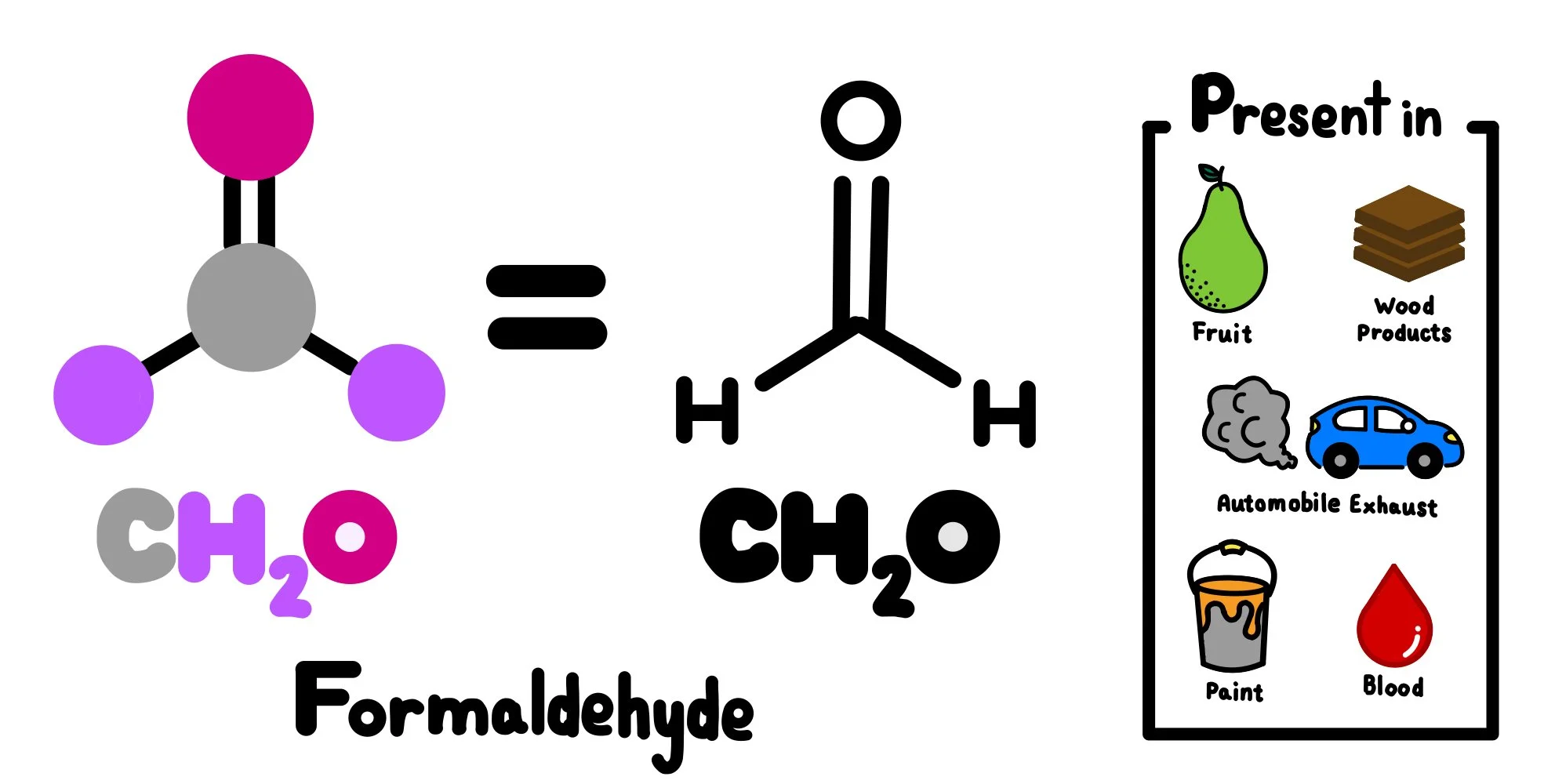
Popularly, formaldehyde is known for its presence in embalming fluid, paint, automobile exhaust, and pressed-wood products. Composed of one carbon, two hydrogens, and one oxygen, formaldehyde can also be found in an abundance of natural sources. Formaldehyde is actually produced by the human body through one carbon metabolism and can be detected in blood. It is naturally found in foods like fruits, vegetables, and meats due to its function as a metabolic intermediate5 and is produced when organic material decays.6
FORMALDEHYDE’S PRESENCE IN COSMETICS
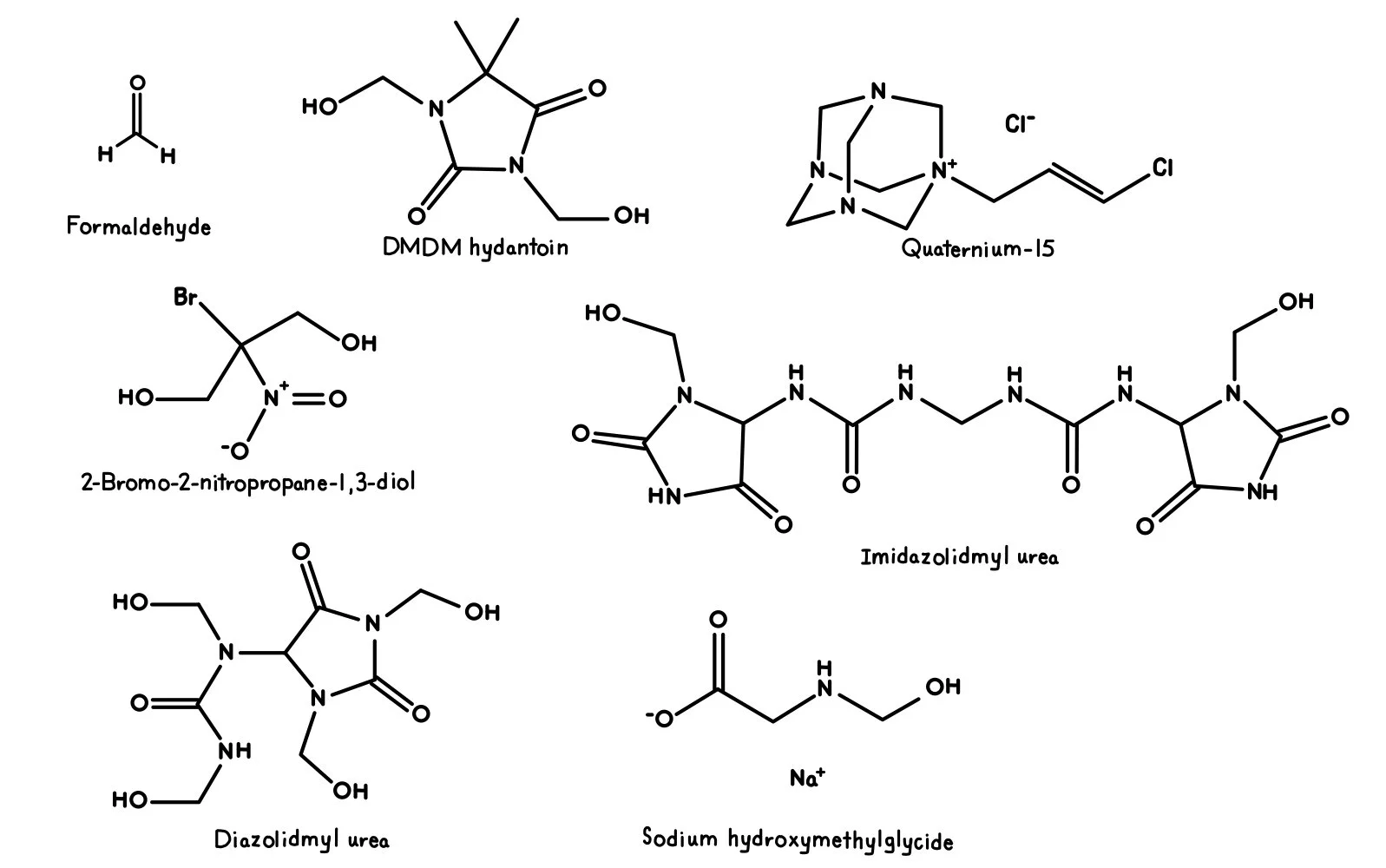
Formaldehyde-releasing preservatives and formaldehyde are often conflated, which can cause undue fear when consumers notice formaldehyde-releasing preservatives in their cosmetic products. The two are not the same! And this is very important when it comes to related risks.
Formaldehyde-releasing preservatives are a very important preservative class, particularly for products with a high water content.
Formaldehyde-releasing preservatives react with water, through a process called hydrolysis, to slowly produce formaldehyde and effectively inhibit microbial growth. This slow release over time is exactly what makes these chemicals so useful, as they ensure long-lasting and efficacious preservation. They are effective at a broad pH range and are broad spectrum, meaning they protect against bacteria, mold, and yeast. This makes them well-suited for:
Products with high water content: These products require water-soluble preservatives, which formaldehyde-donor preservatives are.
Products meant for repeated contact: Repeatedly touching or opening a product introduces new microbes from the environment. These products must be preserved with a high-contact rate in mind.
Products kept in humid environments: Moisture from the environment can create the conditions for microbial growth within a product. This is especially true for products kept in a bathroom or shower.
Products where pH can shift: The pH of a product can shift over time for a number of reasons such as ingredient interactions, changes in temperature, or environmental exposure. If the pH is no longer within the range of the preservative used, efficacy drops. The broad pH range of formaldehyde-releasing preservatives maintains preservation even when pH shifts over time.

Examples of products where formaldehyde-releasing preservatives can be found are lotions, deep conditioners, shampoos, mouses, and leave-in conditioners.
Many of the products listed above are wash-off products. That’s because formaldehyde-releasing preservatives are particularly relevant for wash-off products because of how they work! Due to constantly changing temperature and humidity, as well as the potential for water to leak into the product, shower products are a challenge to preserve. Formaldehyde-releasing preservatives slowly release very small, controlled amounts of formaldehyde, meaning proper preservation is maintained despite the challenges introduced by the shower environment.
Though the release of formaldehyde may sound alarming, formaldehyde is released extremely slowly and thus, the amount of formaldehyde present is extremely low. The human body produces more formaldehyde than a cosmetic product with a formaldehyde-releasing preservative would expose you to.

A 2023 risk assessment looked at DMDM hydantoin (a formaldehyde-releasing preservative) in rinse-off products on the US market. They found that, even when used at the maximum US regulatory limit of 1% (meaning an estimated release of 0.02% free formaldehyde), every product was safe for use. None were expected to increase the risk of skin sensitization in individuals that have not previously been sensitized.7 This risk assessment supports the safety of DMDM hydantoin at the current regulatory limit.
In rinse-off hair products, DMDM hydantoin has the widest use rate. These types of products are where the concentration of DMDM hydantoin is highest. However, the related exposure is the lowest due to short contact time (as compared with leave-on products).8 In leave-on products, market use data shows that DMDM hydantoin is in ~1% or less products. Considering realistic product use frequency, the exposure to DMDM hydantoin is low for the typical consumer.
Separate from the formaldehyde released by formaldehyde-releasing preservatives, hair straightening products and treatments (like Brazilian blowouts or keratin treatments) typically contain intentionally added formaldehyde. Formaldehyde is the cross-linking agent, allowing the keratin (or amino acids, in the case of a Brazilian blowout) to bind to the hair. This forms a smooth, protective layer.9 Though there are hair straightening products claiming “formaldehyde-free,” formaldehyde is still released during the heating process.
The risks associated with the intentional addition of formaldehyde and the formaldehyde released by formaldehyde-releasing preservatives are NOT the same! The amount of formaldehyde present is drastically different between the two.
For those receiving these treatments, the release of formaldehyde from the heating process is not a cause for concern. The bigger issue is related to hair stylists who are providing these treatments often. That said, evaluating the risk to hair stylists from these products is complicated and linking negative health outcomes to this single chemical is not possible. More on that in a later section!
BUT ITS A KNOWN CARCINOGEN: THE HAZARD VERSUS THE RISK
In toxicology, everything has a hazard and a risk. Any substance can cause harm at a high enough level. Conversely, a dangerous substance can be harmless or helpful at a low enough level. As the saying goes: dose makes the poison.
A hazard is the negative outcome that can occur at a certain level of exposure. Exposure is when the body makes contact with a chemical. The route of exposure is how the chemical enters the body, which can happen through routes including inhalation, ingestion, or skin contact.10 The hazardous dose is not inherently relevant to everyday life and, frequently in the case of cosmetic ingredients, is many thousands of times higher than conceivable exposure.
Risk is the likelihood of the negative outcome happening. The use case is the specific context in which something is used. This, alongside route and level of exposure, is crucial for determining risk. Product safety, generally, should be tested along the lines of what the use case is, not the hazardous dose.
There is also the benefit, which is the potential positive outcome! In the case of formaldehyde-releasing preservatives, that is the proper preservation of your product, Here are some everyday examples
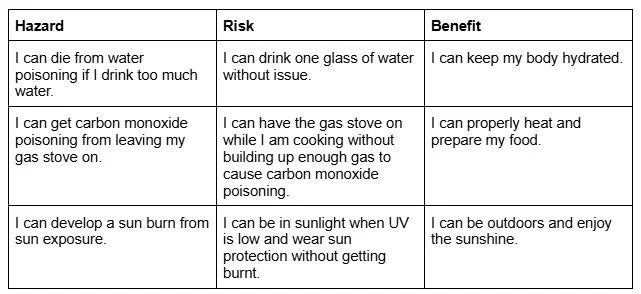
There are hazards and risks associated with formaldehyde, which are:
HAZARD 1: CANCER
Formaldehyde is classified as a carcinogen. The development of cancer from formaldehyde, however, is associated with the upper parts of the lungs and occurs via high-dose inhalation, not through the skin. In cosmetic products, the amount of formaldehyde from formaldehyde-releasing preservatives is extremely, extremely low, and skin exposure is not the route that leads to cancer.
So what is the risk in cosmetics? Fear not! For this hazard to be actualized, the levels of exposure, for the average person, would need to be hundreds of thousands of times higher than what they are exposed to in cosmetic products.
HAZARD 2: SKIN SENSITIZATION
Skin sensitization occurs when a substance elicits an immune response. This immune response, called allergic contact dermatitis, can look like red, bumpy, or itchy skin. This can happen over time and after recurring exposure.
Skin exposure to formaldehyde can cause sensitization. Formaldehyde is volatile and reactive, meaning, when exposure occurs on the skin, formaldehyde stays on the skin. This means very little formaldehyde actually makes it into the body and into systemic circulation. When it reacts with the proteins that make up the skin (if any reaction at all), that’s when contact dermatitis can develop.
So what is the risk in cosmetics? Extremely low. Unless there are pre-existing skin sensitization problems, actualizing this hazard is unlikely. In the case of formaldehyde-releasing preservatives, they may be more appropriate for users with contact dermatitis due to how slow (and how small) the release of formaldehyde is.
A 2022 UK Scientific Advisory opinion on formaldehyde-releasing substances (including DMDM hydantoin) did conclude that current labelling of 0.05% was not sufficient in leave-on products to adequately protect consumers. This was due to clinical evidence that lower percentages can trigger reactions in already sensitized individuals.11 For the vast majority of the public who are not sensitized, these ingredients are well tolerated at and below regulated limits.
HOW TOXICOLOGISTS SET SAFETY LIMITS: THE BUFFER ZONE
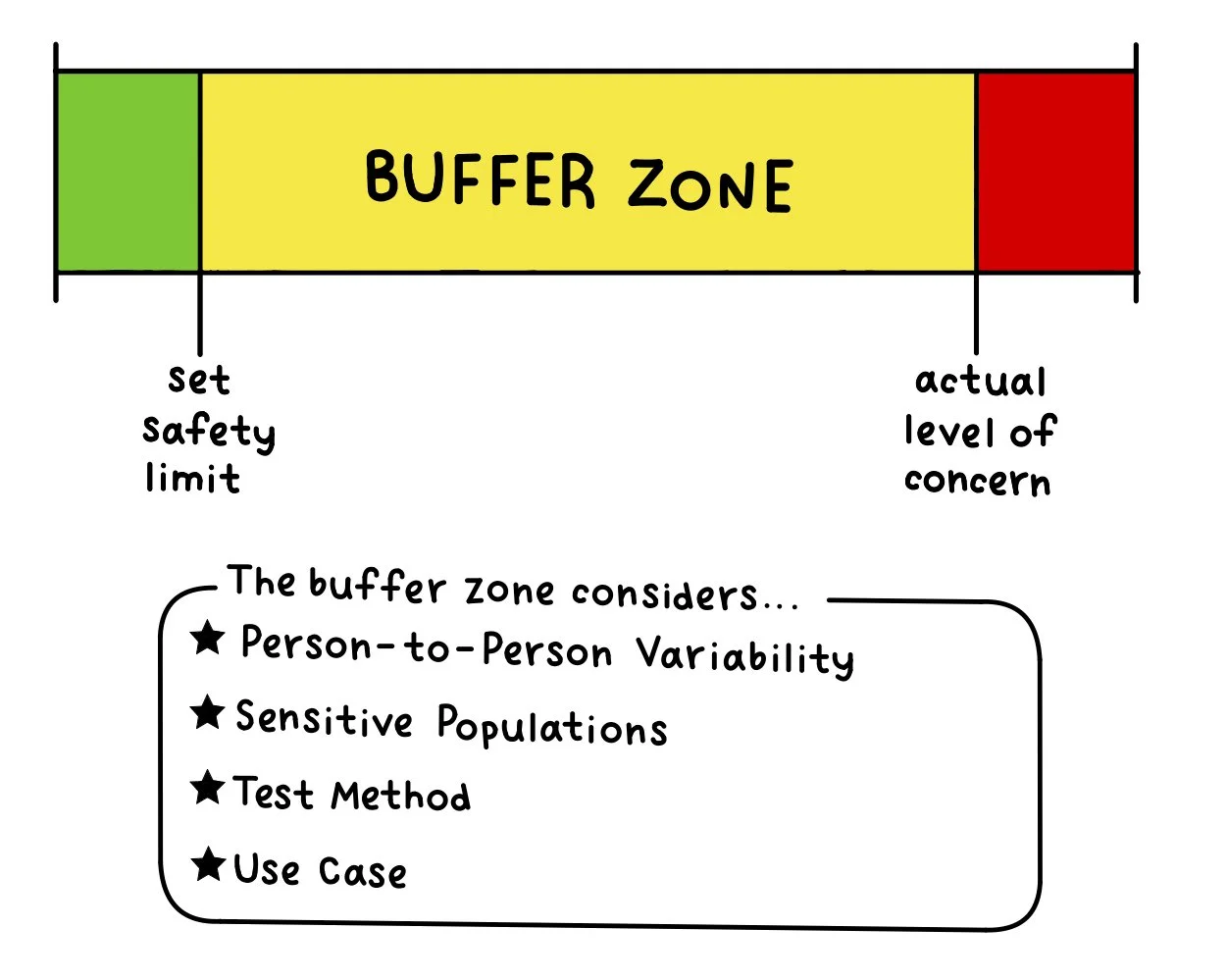
When safety levels are set, there is a built-in buffer zone. This buffer zone takes into account:
Person-to-Person Variability: How different might one person’s reaction be to another.
Sensitive Populations: Those more or less susceptible to actualizing the hazard, for example, old people versus young people, people with sensitization issues versus those without.
Test Method Used: How well does the test method used to gather the safety data match to human biology. Some test methods, such as animal models, do not translate directly to the human body.
Use Case: How much and in what context the substance is used.
The set limit is often hundreds or thousands of times lower than what the actual scientific evidence shows as the level of concern. Even if exposure was at the threshold of the safety limit, the likelihood of a negative outcome is still extremely small.
IN THE HEADLINES
Recent reports have brought formaldehyde and formaldehyde-releasing preservatives under fire.
It is important to preface: the studies examined below emerged from a genuine and important effort to document whether communities of color face disproportionate chemical exposure, including through personal care products. However, translating "detectable" into "dangerous" requires a nuance that headline coverage and these studies often do not address. Trace-level detection of formaldehyde or formaldehyde-releasing preservatives does not, on its own, establish a health risk; exposure levels, frequency of use, use case, and established toxicological thresholds all factor into actual risk assessment, and studies designed to detect presence are not always designed to establish harm. Formaldehyde-releasing preservatives are not solely present in products marketed toward women of color; they are common across the broader cosmetics and personal care industry.
None of this is to dismiss the underlying concern about inequitable exposure to different chemicals of concern or to suggest that structural neglect of certain consumer bases isn't real. It is to argue that reports like those discussed below create noise that distracts from the very real issues that drive negative health outcomes for communities of color. Environmental justice claims are better served by precision than by alarm, and conflating detection with danger risks undermining the credibility of a cause that deserves careful, evidence-based advocacy.
Now, let’s dig into some notable studies.
STUDY 1: WASHINGTON DEPARTMENT OF ECOLOGY
In January 2023, the Washington State Department of Ecology published a report titled “Chemicals in Cosmetics Used by Washington Residents.” This report, alongside others, is what informed the 2025 Formaldehyde in Cosmetics Rule (Chapter 173-339 WAC).
In collaboration with the Washington Department of Health, they identified products used by Washington residents of color, purchased similar products, and tested them for the presence of specific substances including formaldehyde.
40 products were tested, wherein 10 were foundations and the remaining 30 were cosmetics that contained DMDM hydantoin (a formaldehyde-releasing preservative). Their results: formaldehyde was found in 24 of the 30 cosmetics and in none of the foundations. Levels ranged from 39.2 ppm to 1660 ppm, with the highest levels found in styling gels and creams.12
These results may look alarming, but there are issues with this study.
They did not differentiate between formaldehyde and formaldehyde-releasing preservatives: These are not the same!
The value they cite for allergic reactions (200 ppm) is not the regulated limit. In the case of sensitization, the current industry standard is 2000 ppm. Even in their own analysis, every product tested was in compliance.
Ultimately, what they found was good: all of the products were below the threshold. Detectable does not mean dangerous! For the average consumer, their findings are nothing to worry about because all of their products were well under the sensitization limit.
It is of note that recent EU regulations remove some of the shock value of this study and consumers in the US may now see a “releases formaldehyde” label on products. This is because, in 2022, the EU published a new regulation requiring that, if the concentration of formaldehyde released exceeds 0.001% (10 ppm), the label must say “releases formaldehyde.”13,14 This was done exactly to inform sensitized individuals and general consumers. Such that the industry had time to adapt labelling to meet this new rule, a transition period of 24 months was given.13 This study was published during that transition period, as to why the products they were analyzing may not have had this. While the US has not introduced the same legislation, products that meet global compliance standards may have this on the label at US stores.
STUDY 2: SILENT SPRING INSTITUTE
To the tune of headlines like “New study focusing on Black and Latina women found cancer-causing preservatives in lotions, soaps, cosmetics,”15 a 2025 study led by the Silent Spring Institute reignited fears of formaldehyde’s presence in personal care products.
The Silent Spring Institute is a research organization with the stated mission of finding the links between everyday chemicals and women’s health.16 Their work focuses on endocrine disrupting chemicals and breast cancer prevention. They have been criticized for conflating detectability with danger and emphasizing hazard rather than risk.
In this study (Dodson et al.), 70 black and latina women logged their personal care product use over one week. What they found: 53% of participants used at least one product containing formaldehyde or formaldehyde-releasing preservatives.
The issues with this study:
They did not analyze data across multiple populations: Formaldehyde releasers are not specific to products for textured hair. They are not specific to products marketed towards black and latina women. They are used in all types of products. Without data on the market overall, there is no baseline to compare that 53% to.
They equated presence to harm: The study used ingredient lists to evaluate the presence of formaldehyde and formaldehyde-releasing preservatives. But ingredients lists do not provide exact amounts. With safety judgements solely based on the presence of a substance, toxicology’s age old saying “dose makes the poison” goes unregarded.
They did not differentiate between the risks associated with skin exposure and inhalation: Cancer risk is not associated with skin exposure to formaldehyde. That hazard happens through inhalation, which is not relevant to any of the cosmetic products they analyzed. It is in occupational settings, where inhalation of formaldehyde gas occurs, that cancer risk is relevant.
They highlight that 70% of participants used products with FPRs multiple times per week and, for some, multiple times per day.17 It bears reminding that the exposure limits take into account hazard, route of exposure, and usage level. These multiple uses do not create significant risk for the general consumer.
STUDY 3: ENVIRONMENTAL WORKING GROUP (EWG)
In February, 2025, The Guardian published an article titled, “Over 3,000 beauty products targeting Black women contain health hazards, study shows.”18 This claim came from the Environmental Working Group’s (EWG) analysis of products marketed to black women. In this analysis, each of the 4,011 products listed have one of three scores: low hazard, moderate hazard, and high hazard.19 Using this list, they determined that 79% were moderate to high hazard.20
The EWG is a nonprofit research and advocacy group with the stated goal of protecting public health.21 They have received criticism for spreading misinformation regarding cosmetics and overstating the risks of chemicals. Here’s a link to an article Jen wrote about them a few years ago - “A Case Against the EWG.”
In their report, they state that 25.9% of products analyzed contained at least one formaldehyde-releasing preservative. Their analysis shares the same pitfalls as the aforementioned study: they did not analyze data across multiple populations, they equated presence to harm, and they did not differentiate between the risks associated with skin exposure and inhalation.
The most glaring issue: their scoring system. Formaldehyde-releasing preservatives are one of the many ingredients the Skin Deep Database, the EWG’s scoring system, flags. A primary reason why toxicologists, formulators, and industry professionals have taken issue with their scoring system is because it is hazard focused. The EWG themselves state that their “scores are based primarily on the hazards associated with the ingredients in the products”.20 With this methodology, the nuance of dose, route, and use case is lost.
THE IMPACT: NO PERFECT SUBSTITUTION
Sensationalized headlines and the panic that ensues from them cause downstream consequences.
As seen by the Washington Department of Ecology report and the subsequent ban, these studies and headlines drive legislation. There is a general assumption that these regulatory decisions are driven by science, but that’s not always the case. Legislators seldom have technical backgrounds and, even when trying their best, misinformation can be rampant and confusion-causing.
Social inequality is real and pervasive. Focusing on the potential hazard of a chemical, rather than the actual risk, can take away from the real reasons black and latina women face health disparities. Removing formaldehyde-releasing preservatives will not address the larger factors such as access to healthcare, environmental racism, and chronic stress.
But why not be cautious and remove the potentially harmful ingredient? Because that can be more harmful. In the case of formaldehyde-releasing preservatives, public outcry for the removal of these efficacious, safe ingredients leads brands and formulators to use less studied preservatives. Less data means less confirmation of safety and efficacy.
When replacing formaldehyde-releasing preservatives, the biggest risk is the increased potential of microbial contamination. Microbial contamination is the biggest public health threat related to cosmetics. Limiting the preservative options for formulators makes it increasingly difficult to consistently produce safe products. The consequences of a poorly preserved product are much worse than what a formaldehyde-releasing preservative could cause.
There is another complication of removal and replacement: alternatives to formaldehyde-releasing preservatives are not one-to-one. Challenges when reformulating include:
pH: Alternative preservatives do not have the same broad pH range as formaldehyde-releasing preservatives. They often require a lower pH, meaning high pH products become more difficult to properly preserve. Some lose efficacy after a certain pH range is passed, which is especially concerning for products where the pH shifts over time. A narrower pH range can introduce challenges for other ingredients in the formula that are pH sensitive.
POTENCY: Alternatives can be less potent, meaning more is needed for proper preservation. By increasing the percentage of preservatives in the product, the percentage of other ingredients is inherently decreased. Frequently, it is not one ingredient that changes, but the entire formula.
UNEXPECTED REACTIONS: A different preservative can react with other ingredients in any number of ways. Any shift in pH can also cause reactivity with other chemicals.
COST: Continuous redevelopment is expensive, especially for an economy of scale such as personal care. Changes in the formula can complicate production, require stability and claims testing to be redone, and necessitate new packaging and ingredients lists. For the business, the cost of reformulation may not be worth it, especially without clear benefit to consumers. When reformulation does occur, the increased cost may be put on the consumer or may make the survival of the business more tumultuous.
All together, these challenges make proper preservation more difficult. It bears repeating: the consequences of a poorly preserved product are much worse than what a formaldehyde-releasing preservative could cause.
SO FORMALDEHYDE-RELEASING PRESERVATIVES ARE SAFE. WHAT ABOUT HAIR STRAIGHTENING TREATMENTS?
There is concern regarding the level of formaldehyde released when hair straightening treatments are heated.
To replace formaldehyde, hair straightening products have begun using glyoxilic acid. Glyoxilic acid, however, has been linked to reports of people suffering from severe kidney problems after getting a straightening treatment.22 In April 2025, the EU issued a call for data on glyoxilic acid in straightening products.23
When glyoxilic acid is heated, formaldehyde is released. But is this the source of the problem? It’s difficult to say.
Remember: formaldehyde is volatile and reactive. When formaldehyde exposure occurs, it stays at the site of exposure. Because of that, it is difficult to say that a straightening chemical applied to the hair would cause kidney damage because very little free formaldehyde would make it into the bloodstream and to the kidney.
For the professionals doing these procedures, there are studies showing that certain professions in the beauty industry have a higher incidence of certain conditions, including cancer. It is true that someone applying these products all day, everyday is exposed to a much higher dose, which does increase risk. And, despite its importance, personal protective equipment is sometimes overlooked in these professions. Still: the connection depends on the study, wherein some have seen no effect and others have seen increased risk. Drawing a throughline to a single chemical is not possible because professionals, just like consumers, are exposed to many, many different chemicals.
In general, the risk associated with a once-in-a-while hair straightening treatment is very low.
WHERE TO GO FROM HERE?
Formaldehyde and formaldehyde-releasing preservatives in your cosmetics are not cause for alarm. There are regulated limits with built-in buffer zones designed to keep you safe. Manufacturers of personal care products have regulatory teams and testing labs that ensure these products are within compliance and meet legislative standards. With modern analytical techniques, we can detect minuscule levels of chemicals, but detectable does not mean dangerous.
Want to learn more about what is in your personal care products? There are other platforms aside from the EWG. Check out the Cosmetic Ingredient Review or the PCPC’s website, cosmeticsinfo.org.
Fear is powerful. It is scary to find out that our safety is being jeopardized. When hearing about a supposedly dangerous chemical, consider where the information is coming from. Find relevant, trusted experts that you can consult on these topics.
And always remember: dose makes the poison.
Big thank you to Bella Wagner for writing this summary, and to Gabrielle and Joe for sharing their knowledge in the podcast this summary is based on. For loads more, be sure to tune into the full podcast episode!
Find the Formaldehyde in Cosmetics Roundtable with Gabrielle Dwyer & Joe Zagorski PhD here!
REFERENCES
1. “Formaldehyde Confirmed as Known Human Carcinogen.” National Academies, 8 Aug. 2014, www.nationalacademies.org/news/formaldehyde-confirmed-as-known-human-carcinogen.
2. “Washington moves to restrict cancer-causing chemicals in cosmetics.” Washington State Department of Ecology, 28 Aug. 2025. Press release. www.ecology.wa.gov/about-us/who-we-are/news/2025/formaldehyde-releasers-rule.
3. “Toxic-Free Cosmetics Act (TFCA)“ Washington State Department of Ecology. www.ecology.wa.gov/waste-toxics/reducing-toxic-chemicals/washingtons-toxics-in-products-laws/toxic-free-cosmetics-act.
4. Oregon Revised Statutes. Volume 12, title 36, chapter 413A Public Health Programs and Activities, section 431A.345. “Prohibition on certain intentionally added chemicals or classes of chemicals” Oregon Laws. www.oregon.public.law/statutes/ors_431a.345.
5. “Formaldehyde in Food.” Centre for Food Safety, www.cfs.gov.hk/english/programme/programme_rafs/programme_rafs_fa_02_09.html. Accessed 8 Sept. 2026.
6. “Formaldehyde.” National Cancer Institute, www.cancer.gov/about-cancer/causes-prevention/risk/substances/formaldehyde. Accessed 8 Sept. 2026.
7. Stewart CK, Parker J, Hwang R, Vincent M, Fung E.”Quantitative Risk Assessment of Dermal Sensitization Potential Following Use of Shampoo Products Containing the formaldehyde releasing preservative DMDM Hydantoin.” International Journal of Toxicology, vol. 42, no. 4, 2023, pp. 326-333, https://doi.org/10.1177/10915818231174429.
8. Tozer, S., et al. “From worst-case to reality–Case studies illustrating tiered refinement of consumer exposure to cosmetic ingredients.” Regulatory Toxicology and Pharmacology, 143:105436, 2-23, https://doi.org/10.1016/j.yrtph.2023.105436.
9. “The Science Behind Keratin Treatment: How Does It Work?” Coffee & Hair Co., 30 Nov. 2024, coffeeandhair.co/the-science-behind-keratin-treatment/.
10. “Element 4: Exposure Routes.” ATSDR, 14 Jan. 2025, www.atsdr.cdc.gov/pha-guidance/conducting_scientific_evaluations/exposure_pathways/exposure_routes.html.
11. “Final Opinion on Formaldehyde Releasing Substances.” Scientific Advisory Group on Chemical Safety, 2022, Office for Product Safety & Standards, assets.publishing.service.gov.uk/media/63ce6face90e071ba448517b/sag-cs-opinion-07-formaldehyde-releasing-substances.pdf.
12. “Publication Summary: Chemicals in Cosmetics Used by Washington Residents.” Washington State Department of Ecology, 23-04-007, Jan. 2023, apps.ecology.wa.gov/publications/SummaryPages/2304007.pdf.
13. “COMMISSION REGULATION (EU) 2022/1181.” Official Journal of the European Union, OJ L 184, pp. 3-4, 8 July 2022, eur-lex.europa.eu/legal-content/EN/TXT/?uri=celex:32022R1181. EUR-Lex.
14. “Consolidated text: Regulation (EC) No 1223/2009” European Parliament, OJ L 342 22.12.2009, pp. 59, 18 May 2026, eur-lex.europa.eu/eli/reg/2009/1223. EUR-Lex.
15. Zota, Ami. “Formaldehyde Risk from Common Personal Care Products.” Columbia Mailman School of Public Health, 7 May 2025, www.publichealth.columbia.edu/news/formaldehyde-risk-common-personal-care-products. Columbia University Irving Medical Center.
16. “About Us.” Silent Spring Institute, silentspring.org/about-us. Accessed 8 Sept. 2026.
17. Dodson, Robin E., et al. “Formaldehyde and formaldehyde releasing preservatives in Personal Care Products Used by Black Women and Latinas.” Environmental Science & Technology Letters, vol. 12, no. 9, 2025, pp. 1205-1210, https://doi.org/10.1021/acs.estlett.5c00242.
18. Perkins, Tom. “Over 3,00 beauty products targeting Black women contain health hazards, study shows.” The Guardian, 25 Feb. 2025, www.theguardian.com/us-news/2025/feb/25/black-women-beauty-products-hazardous-ingredients.
19. “Full list of products marketed to Black women.” EWG, static.ewg.org/upload/pdf/PMBW_Analysis_List.pdf.
20. Beins, Kaley; Friedman, Alexa; Lin, Hong; Edwards, Kristian. “Higher hazards persist in personal care products marketed to Black women, report reveals.” EWG, 11 Feb. 2025, www.ewg.org/research/higher-hazards-persist-personal-care-products-marketed-black-women-report-reveals
21. “Who We Are.” EWG, www.ewg.org/who-we-are. Accessed 8 Sept. 2026.
22. Robert, Thomas, et al. “Kidney Injury and Hair-Straightening Products Containing Glyoxylic Acid.” The New England Journal of Medicine, vol. 390, no. 12, 20 Mar. 2024, pp. 1147-1149, https://doi.org/10.1056/NEJMc2400528.
23. “Call for data on glyoxylic acid used in cosmetic products.” European Commission, 9 Apr. 2025, single-market-economy.ec.europa.eu/consultations/call-data-glyoxylic-acid-used-cosmetic-products_en.