Extended Producer Responsibility (EPR) in Beauty: What You Need To Know
Written by Sana Ilyas (one of our SciComm Cohort graduates!) based on the EPR roundtable on The Eco Well podcast with Michael Washburn, PhD and Akemi Ooka, PhD.
A Quick Intro from Jen
Extended Producer Responsibility (EPR) laws are becoming increasingly important to the cosmetics industry. There’s a patchwork of rules cropping up globally that, if beauty brands fail to comply with properly, may come with real consequences. For example, in California, if brands don’t comply, that can come with consequences like $50,000 fines PER DAY, SINCE THE TIME OF THE LAW IMPLEMENTATION. It’s crucially important for beauty brands to keep up with what’s happening. To help, our latest podcast episode featured an expert roundtable discussion on EPR in Beauty, featuring the POVs of Akemi Ooka, PhD (CEO at Independent Beauty Association) and Michael Washburn, PhD (EPR expert at EPR Academy). This post contains a quick summary of the points covered, written by Sana Ilyas. For loads more, be sure to tune into the episode associated with this post!
What is EPR?
It's a policy tool that aims to improve recycling rates and waste management, shifting the responsibility from everyday people and our waste-management infrastructure to companies (the “producers”). It does this in two major ways:
Producers become financially responsible for waste management instead of taxpayers. They must pay for the end-of-life management of covered products, which includes collection, sorting, recycling, and infrastructure improvements.
Producers become legally responsible for reducing waste and must meet specific recycling requirements for covered products. Producers who sell or distribute covered products into a state have legal obligations under EPR that they must meet.
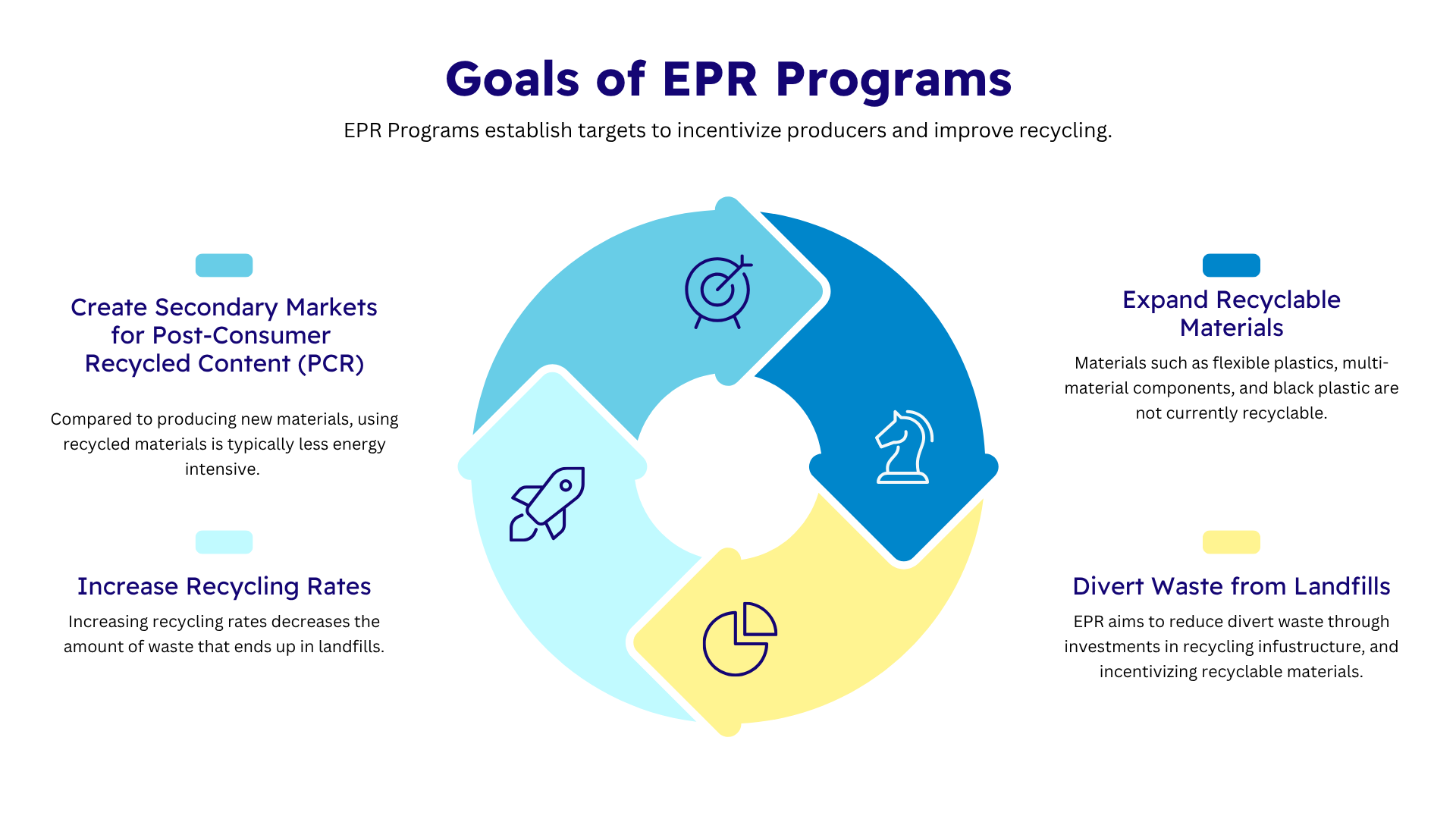
Who is the “producer”? Producers is a word commonly used when talking about EPR, and it refers to companies that must meet certain obligations under EPR. Typically, a producer is the brand owner, but can also include manufacturers, licensees, distributors, or importers.
EPR was first introduced in Europe in the late 1990s and has since been adopted in at least 50 countries around the world, including in the USA.
This article specifically discusses packaging EPR, so “covered products” includes almost all packaging for consumer products, including cosmetics. EPR programs also exist in other product categories with a narrower scope, such as paint, batteries, and mattresses.
Why is EPR important?

Recycling is essential to how municipalities manage waste, however, in practice there are multiple financial and operational issues with recycling in the United States. According to a study by the Recycling Partnership in 2024, only 21% of residential recyclables in the United States are actually being recycled (1).
Before EPR regulations started to emerge, there was no financial incentive or legal requirements to improve recycling infrastructure. By shifting responsibility to producers, Extended Producer Responsibility (EPR) changes this by providing the financial resources to improve recycling rates. It also incentivizes producers to improve the recyclability and reduce the amount of their packaging by having legally binding requirements. It has shown to be successful in other countries, such as Belgium, which has seen recycling rates double since the start of their program in 2023.
EPR in the USA
There is currently no federal EPR law, but many states have created their own set of rules. This makes a lot of sense logistically, since each state has its own unique waste management circumstances. However, it may create quite a logistical headache for beauty brands, who have to keep on top of each of the rules cropping up in every state they sell into.
Quote from Akemi Ooka PhD: “States are looking for where they are going to get money to pay for programs and these municipal services, and in particular recycling infrastructure. Where are they going to go to get it? So I think that we're likely to continue to see EPR emerge in the U.S. at the state level and not just in very progressive areas. I think that it has a fairly broad appeal as a framework across all kinds of states.”
In 2021, Maine became the first state in the USA to pass EPR, and since then the amount of states passing EPR laws has only been increasing. The regulatory landscape for EPR is constantly evolving, but as of September 2026, seven states have implemented EPR programs: California, Colorado, Maine, Maryland, Minnesota, Oregon, and Washington. Other states, such as Illinois, do not have EPR programs, but are currently undergoing needs assessments, which signals EPR laws to come.
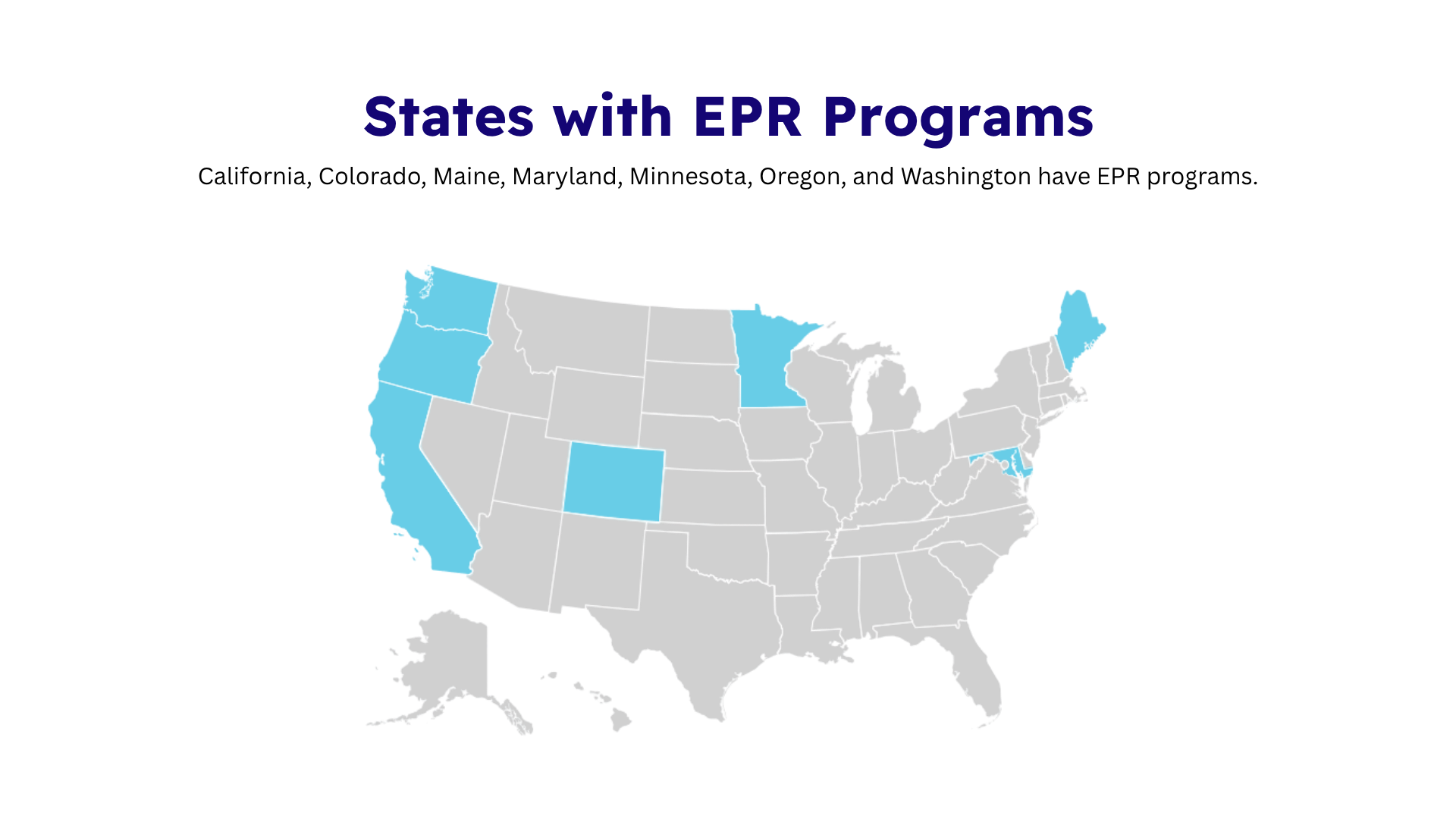
There is a patchwork of rules across the USA, and brands need to understand the lot of it. Each state has their own requirements, and there is no federal regulation for EPR, so each law must be assessed and followed separately. The scope, definitions, exemptions and requirements are not harmonized between EPR programs. This creates a significant regulatory challenge for brands selling across all the different states in the USA.
For example, as part of their EPR program, California requires a 25% reduction in plastic packaging by 2032, the most aggressive recycling reduction target worldwide. This will be measured based on a 2023 baseline report producers are required to submit. In the report, producers must include the amount of packaging material sold in 2023, the total weight of plastic and total number of plastic components. Plastic component specific information is not required in other state reports.
Certain states have small business exemptions for their EPR laws, but in beauty, I wouldn’t bank on them. These exemptions reduce regulatory and reporting requirements, with limits based on annual sales or amount of packaging. Once a company exceeds this limit, they will have to meet the full requirements of the regulation. Especially in the age of social media, it is possible for products to go viral, leading to unexpected sales that would exceed the threshold for the exemption. Therefore, brands should carefully track their sales and understand EPR requirements regardless of whether they are currently eligible for an exemption.
Can brands just avoid states that have EPR rules? Realistically, no. The rise of e-commerce and the complexities of shipping and distribution networks make this extremely difficult and not practical. Brands need to review the regulatory requirements and exemptions in each state to fully understand their obligations and avoid paying costly fines.
How does EPR work?
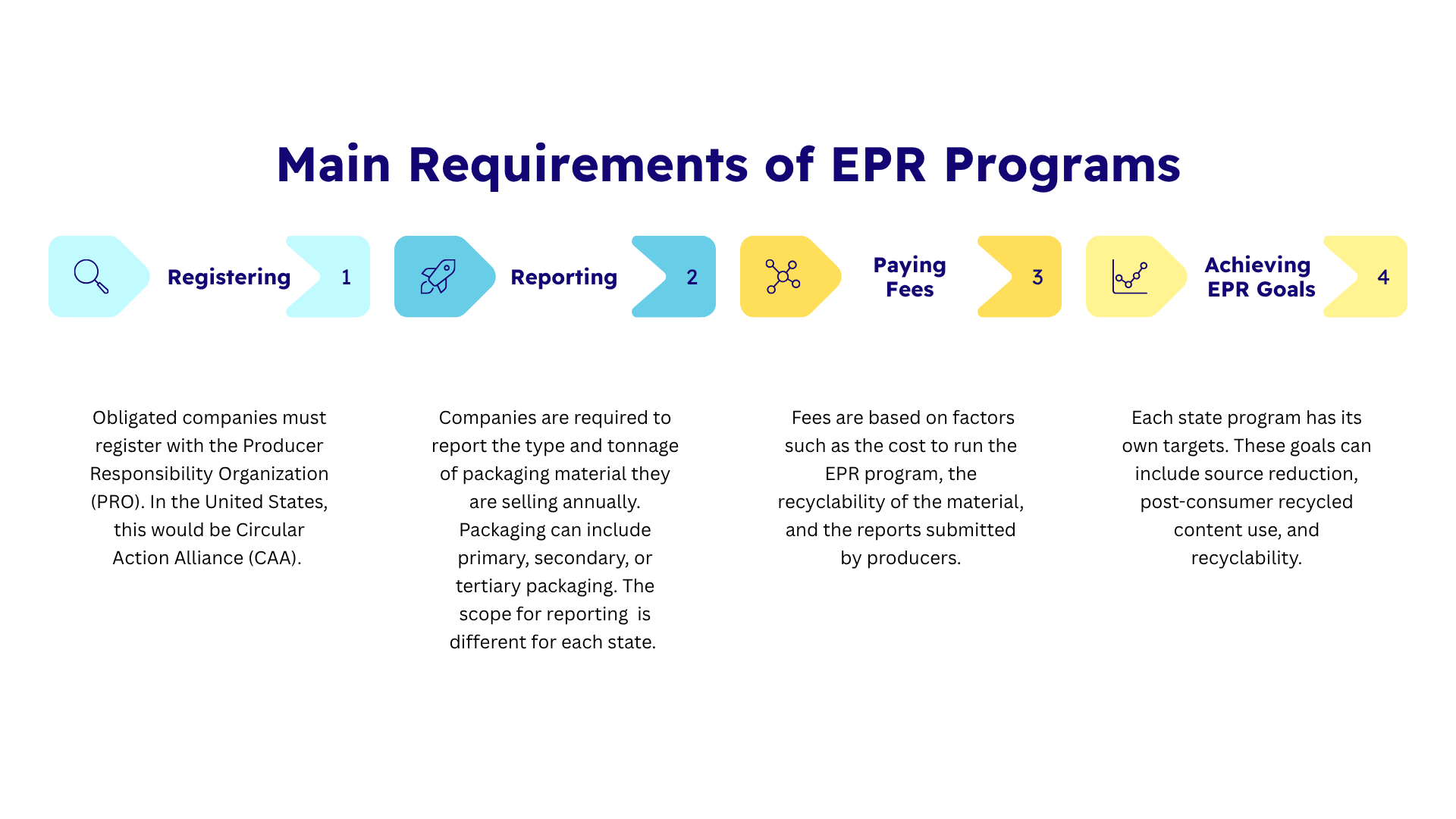
The “producers” must:
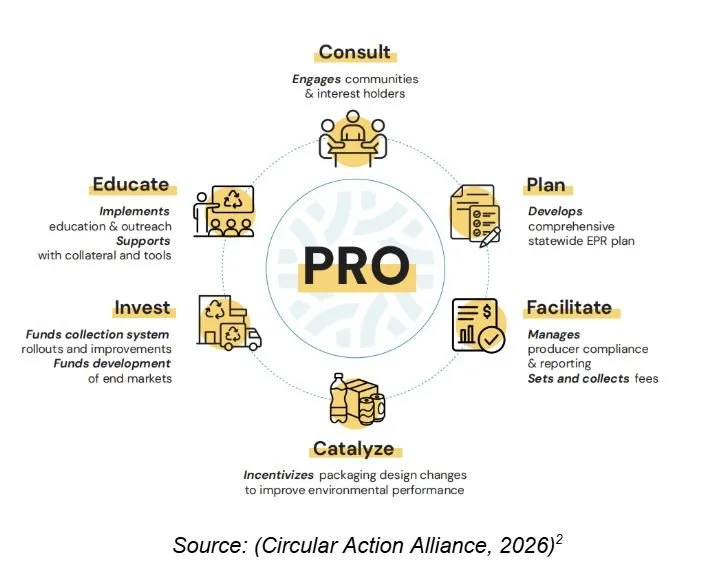
Register: Register with the Producer Responsibility Organization (PRO). PROs are organizations that represent producers and act as a “middle man” between producers and state agencies.They are the unified body responsible for actually meeting the requirements of the EPR program and implementing improvements to recycling management and infrastructure. Currently, Circular Action Alliance (CAA) is the PRO for all US states with EPR programs except Maine.
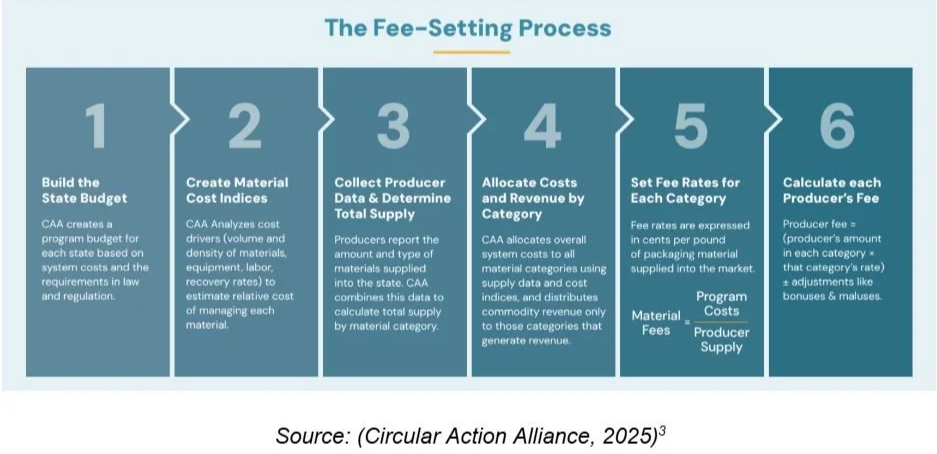
Report: Report to the PRO the type and weight of material they are using, distributing, and selling into these states annually. These reports are used to determine fees the producer must pay for the recycling of their packaging.
Pay Fees: Pay fees based on the reporting and specific requirements for the law. Each state has their own fee rates per packaging type dictated by factors such as the cost to implement the program and manage the recycling of materials. The fees that are paid to the PRO are used to fund improvements to the waste management system.
Achieve Goals of EPR Programs: Work to redesign their packaging to meet the overall recycling goals of each EPR program and reduce their fee obligation. Improvements include reducing the amount of packaging, increasing the amount of post-consumer secondary content used, switching to recyclable materials, and implementing refillable packaging.
What does Non-Compliance with EPR look like? This could include not registering with the PRO, registering but not reporting, or not paying fees on time.

Potential consequences for non-compliance:
Delinquency Notices: Respective state environmental agencies or CAA can send a delinquency notice stating that a producer is out of compliance.
Fines: If a producer is out of compliance for multiple years, the law requires them to pay fines to state authorities and also register, report, and pay fees and interest starting from the beginning of the program of up to $50,000/day in certain states.
Private Lawsuits: Consumer attorneys are very widespread in the cosmetics and personal care industry. Non-compliance can open up brands to lawsuits by private parties or other companies.
Public Disclosure of Non-Compliance: Only 2,000 to 3,000 companies have registered with CAA which is around 10% of total obligated companies. This unfairly burdens compliant producers with the fees that should be shared amongst all obligated companies. The list of producers registered with the PRO is public, so producers should review the list, and call out competitors who are obligated under the program but not registered.
How do I track packaging data and report for EPR?
Quote from Michael Washburn PhD: “It's wildly important for EPR that you get your scope right so that you don't report for things that you're not obligated to, and so that you do report for things where you are. I have witnessed firsthand that there's a lot of folks who think it's all about the data but don't really understand the complexity underneath.”
Reporting is the most critical aspect of EPR, because it dictates fees and baselines for recycling goals under each EPR program. To accurately report, brands must first understand the scope of the reporting requirements for each state.
Once a company understands the reporting scope, the second challenge is obtaining data such as packaging weight and material type. The most important information brands need to gather is the SKU, packaging bill of materials, the material type for each component, and the weight of the components. This data should include all primary, secondary, and tertiary packaging used. For California specifically, producers will also need to know the number and weight of the plastic components. This can be done using a simple excel sheet or more sophisticated tools such as those for product life management (PLM) and enterprise resource planning (ERP).
Finally, there are also additional intricacies producers must consider when reporting depending on the state. Whether a component, such as a bottle cap or label, is considered separable or non-separable, affects whether packaging components should be reported into different categories. Also, packaging made up of multiple material types may need to be reported in multiple categories, depending on the complexity and design of the components.
Given that beauty packaging is arguably the most complex of any consumer products goods, this may be particularly challenging for beauty brands. For example, a pump container can have over 15 individual components and be made out of multiple materials. This makes things very tricky to track and report - having the right systems in place early on is very important!
In summary, this is all pretty complex, so as a brand, it’s incredibly important to make sure you’re working with the right people to help you get this all correct.
For Beauty Brands, What are factors to consider when redesigning packaging?
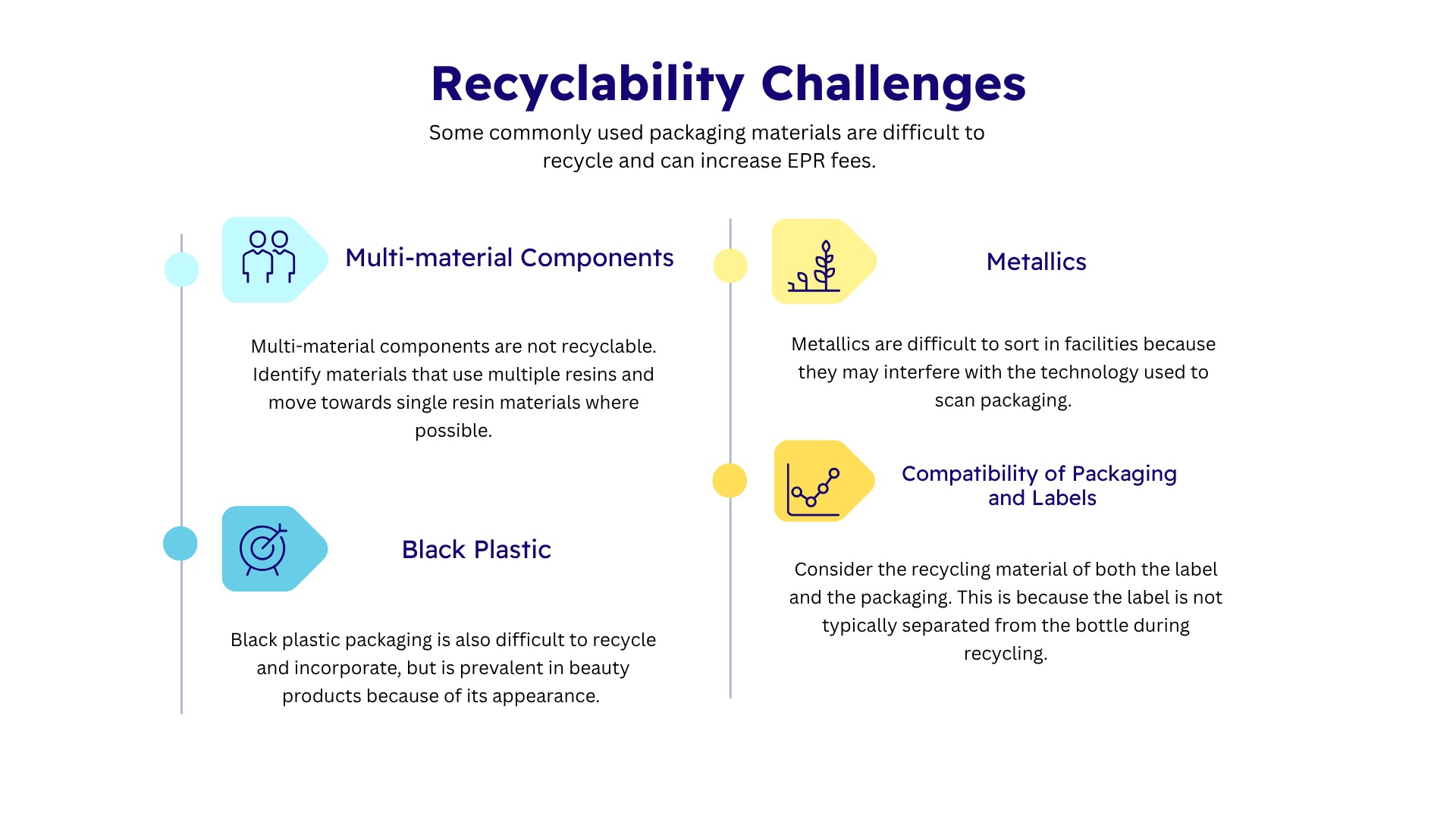
When considering packaging redesigns, prioritize moving to recyclable materials, increasing the amount of post-consumer recycled content, switching to single resins, and reducing the weight of packaging used. States, such as California, require all packaging to be recyclable by 2032. Materials such as black plastic, multi-material components, and metallics are difficult to recycle and can increase EPR fees in each state.
Even if packaging is fully recyclable, such as a PET bottle, brands must also consider the compatibility of the bottle with the label, because the label is not typically separated from the bottle before being recycled. Even though brands would associate paper labels as more eco-friendly, in the washing process at sorting facilities, paper will disintegrate instead of float. This makes it difficult to separate and would contaminate the PET stream whereas a PET label can be recycled with a PET bottle.
Refillable Packaging and EPR
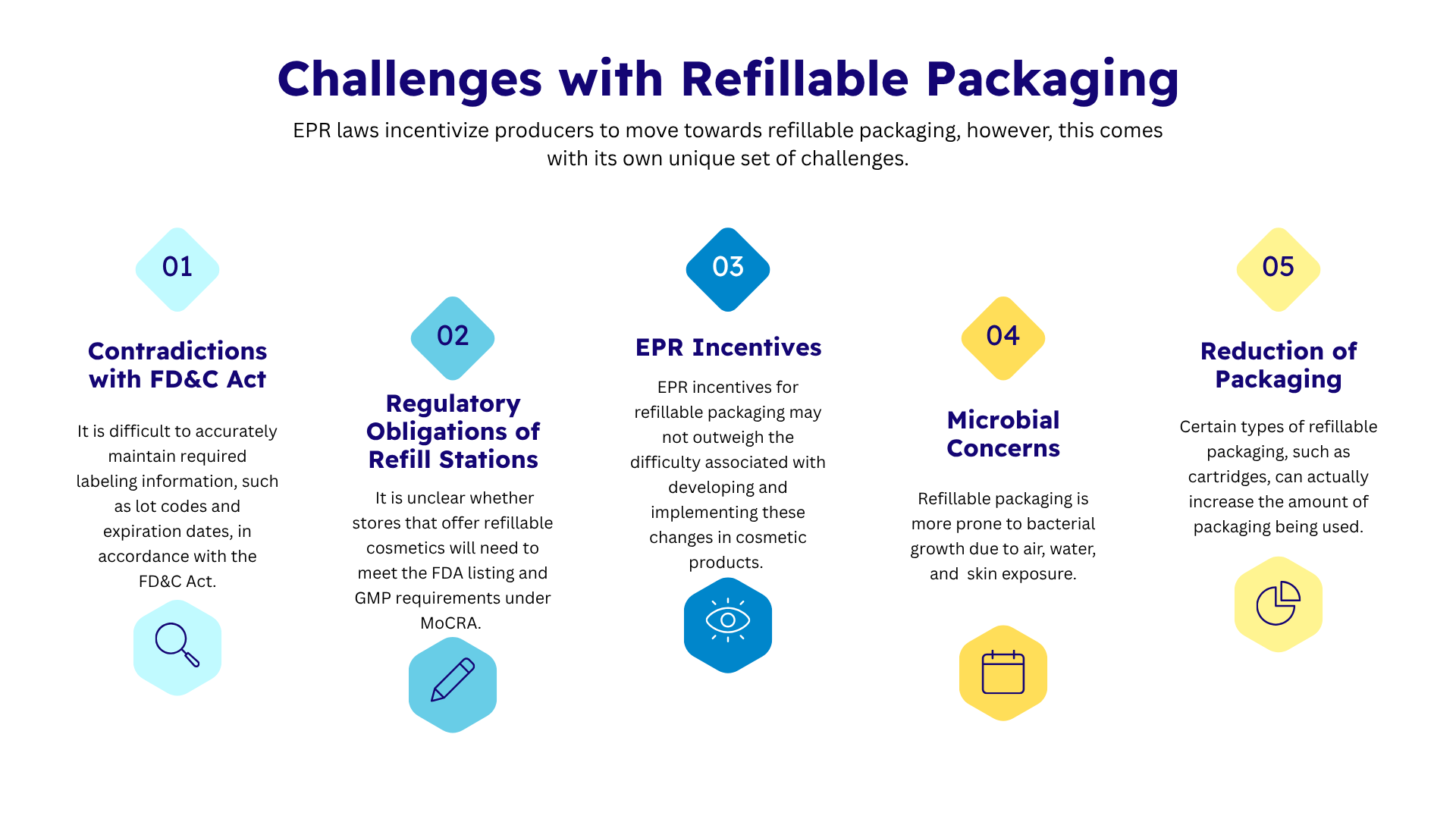
EPR laws also often incentivize producers to move to refillable packaging, but there are questions regarding how beneficial this shift actually is. For example, will it actually help reduce packaging waste? There may be instances where these formats increase waste, and this all really depends on the refill strategy, product and consumer compliance.
For example, there are many cartridge type refill formats that require a certain amount of re-uses from consumers to tip the scales for the product to have a net environmental impact reduction. Often, this doesn’t happen due to a myriad of reasons between higher costs or general lack of consumer acceptance. The individual products may end up being more impactful in these instances. There may also be an issue of increased waste due to excess stock that isn’t purchased.
For example, due to challenges with quality control, which is very difficult with many refill options, these products may be at a higher risk for microbial contamination. This is not only an issue for creating more waste, it’s also a significant consumer safety issue. Microbial contamination remains the largest public health risk related to cosmetic products.
There are also issues where refill stipulations in certain states may be mutually incompatible with other regulations, making it virtually impossible for brands to be compliant with all the different regulations they should be complying with. For example, labelling is a federal requirement and should include, by law, lot codes, expiration dates, ingredients lists, manufacturer info, etc. Lot codes are needed for adverse effect reporting under MoCRA because they trace back to batches. It would be extremely difficult to maintain this information with refillable packaging - especially when we’re talking about the bulk refill options. Furthermore, who’s the manufacturer when the product is being refilled at a refillery-type store?
These are things state-regulators may not even be aware of. For the beauty industry, there is a big need for cross-talk between industry members and state-regulators to keep everyone on the same page. This is something the Independent Beauty Association has been trying to facilitate with some of its advocacy work, including its Meet the Regulator events.
Additional resources
A great resource is the producer resource center on the Circular Action Alliance website (https://circularactionalliance.org/producer-resource-center). The resource center has worksheets, accepted methodologies, and producer guidance to assist with reporting. There is also a support email (Producer.Support@circularaction.org) for any questions. CAA is not a consultancy that can help producers report, they can only communicate what the rules are. Subscribing to regulatory newsletters and joining trade associations, such as the Independent Beauty Association, can help producers keep up with major updates.
Big thank you to Sana Ilyas for writing this summary, and to Akemi and Michael for sharing their knowledge in the podcast this summary is based on. For loads more information, be sure to tune into the full podcast episode!
Find the EPR in Beauty Podcast Roundtable with Dr Akemi Ooka PhD & Dr Michael Washburn PhD here!
References
The Recycling Partnership. (2024, January 10). Most of Loss Due to Lack of Access to Recycling Service and Insufficient Communication. Retrieved September 20th, 2026 from https://recyclingpartnership.org/report-shows-only-21-of-u-s-residential-recyclables -are-captured-points-to-policy-and-investment-as-immediate-solutions/
Circular Action Alliance. (2026, February 19). California Program Update Webinar. [Webinar]. Retrieved July 28th, 2026, from https://circularactionalliance.org/webinar-archives/v/lrmcnxt4k7tb9lgbpfhdxjbw bxy4lk
Circular Action Alliance. (2025, November). Understanding EPR Fee Setting. [Flyer]. Retrieved August 7th, 2026 from https://circularactionalliance.org/epr-fee-setting