A 101 on Botanical Extracts in Beauty
Written by Annika Lagut PhD based on Prof Monique Simmonds PhD conversation on The Eco Well Podcast
Intro from Jen
Botanical extracts is a huge and complex topic that touches on so many areas of science. From botany to agriculture to pharma and so on. A lot of different experts have to work together within different institutions and companies to get to a quality extract in a beauty product. Some brands do their due diligence, many do not, leading to a wide array of varying quality extracts on the market. To help us grapple with the topic of extracts in beauty, my last podcast featured a conversation with Prof Monique Simmonds, botanist and chemist who has spent her career doing plant research (into topics like this and many more!) at Royal Botanic Gardens, Kew. This blog post is a summary of that conversation, written by Annika Lagut PhD. For loads more, be sure to tune in to the podcast associated with this post!
Big thank you to Colonial Chemical for sponsoring this post to help us pay Annika for her time creating this post for us!
What is an extract?
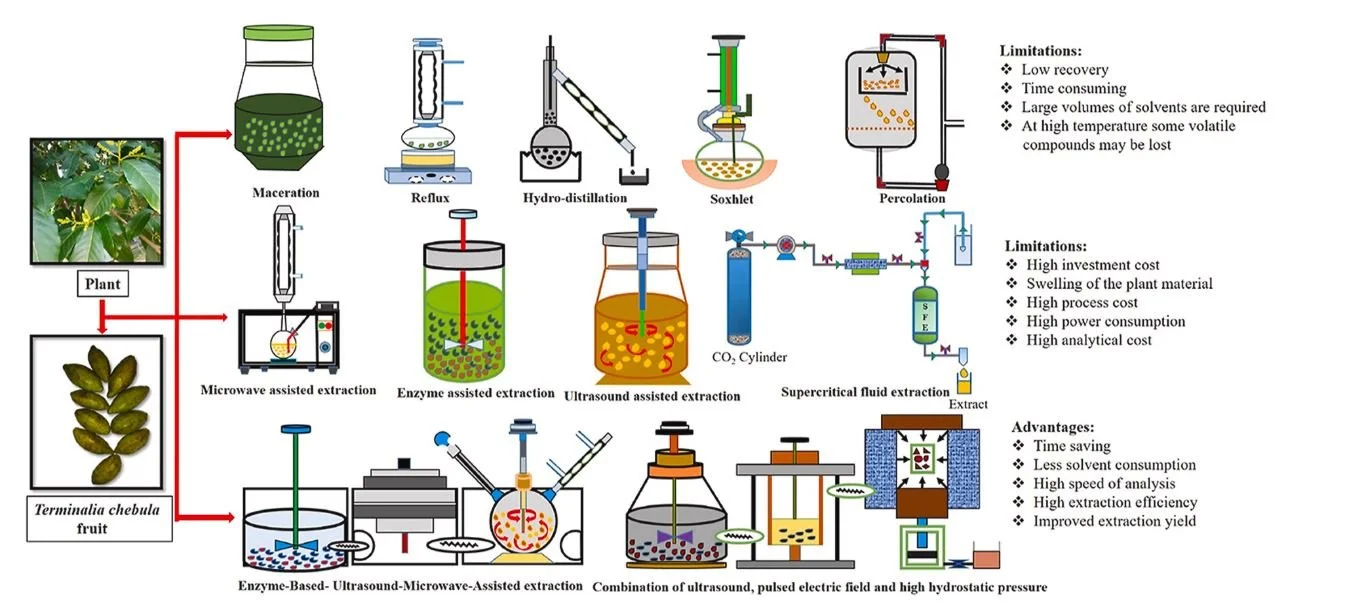
“Extract” is a very wide term meaning any material condensed from plant matter. In everyday life, the most common extracts are tea and coffee. We take the plant material and infuse it in hot water to extract the drink. Similar processes can be carried out with a lot of different plants. We can vary the starting plant material, the solvent and the process itself. Instead of water, we can extract into alcohol, glycols or a wide variety of other solvents. The choice of the solvent determines which types of chemical compounds we extract. We can also adjust the extraction temperature and other parameters. Another common extraction technique is distillation, which will result in essential oils. At the end of the day, different methods of extracting a plant result in different chemical compositions. As a result, for brands using extracts, it is extremely important to get clarification from an ingredient supplier on the exact method of extraction.
Different methods of extraction. DOI: 10.1016/j.tifs.2021.11.019
What about powdered extracts? These are extracts that have been dried down. They’ll follow some of the extraction methods above, but are turned into a powder to make them more versatile.
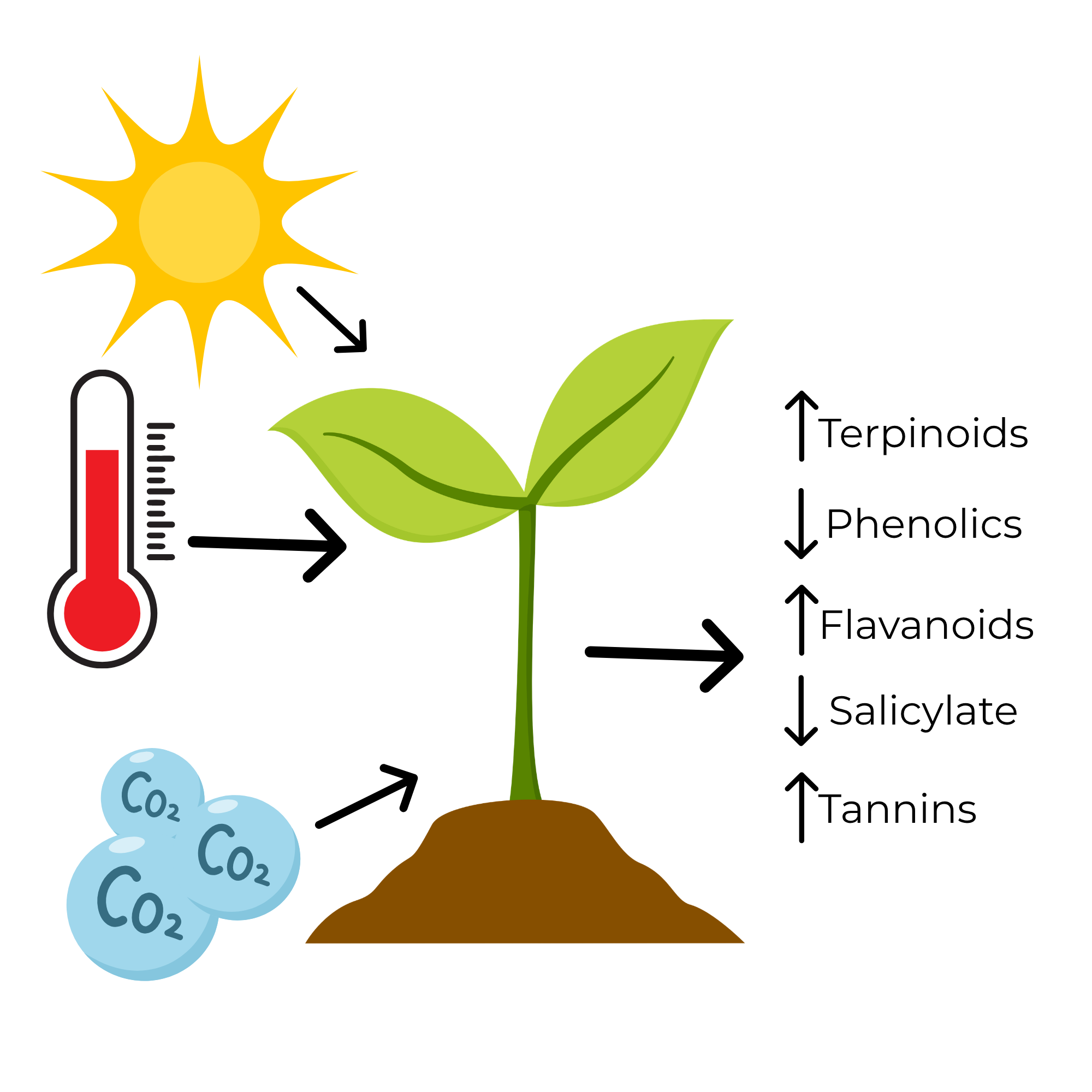
Plants adapt to their environments to improve survival. They have protective thorns or synthesize certain chemicals to fend off animals or to protect from microbial attacks. This varies from season to season, region to region and plant variety to variety. Plant chemistries are fine tuned for their purposes, producing different chemicals at different concentrations at different stages of their life cycle. Sometimes these chemistries line up with skincare benefits, sometimes they don't (e.g. poison ivy, centella asiatica).
Implications for extract quality
The quality of the starting plant material is incredibly important. Knowing which chemical compounds we’re expecting to find in the plant helps to plan for the best possible extraction. One way that brands can begin to assess the quality of an extract is to ask for the concentration of phenolics (aromatic organic chemistry compounds, like flavonoids) and polysaccharides (like starch, pectins) in the extract. For example, the fingerprint (the chemical composition) of X extract would show Y percentage of phenolics or Z percentage of rosmarinic acid. The fingerprint lets you know if the extract is of suitable quality for your application. Different relative concentrations of different compounds are suitable for different applications. This means that the quality of the extract is not entirely rigid but rather dependent on the end use.
The most important thing to remember is that if the starting plant material is of poor quality, you can only get a poor quality extract. Some of the factors influencing extract quality are using the correct plant parts, making sure the material is properly cleaned, using plants harvested at the optimal time from the optimal region for the searched compounds.
A huge part of the plant extract business is understanding the geography of optimal growth for specific plants. Argan oil, for example, is from argan trees that mostly grow in North Africa, countries like Morocco. While suppliers don’t always provide the exact country of origin, more and more people are interested in this information. While providence is a useful gauge for quality, it also helps to market the extract through its traditional use.
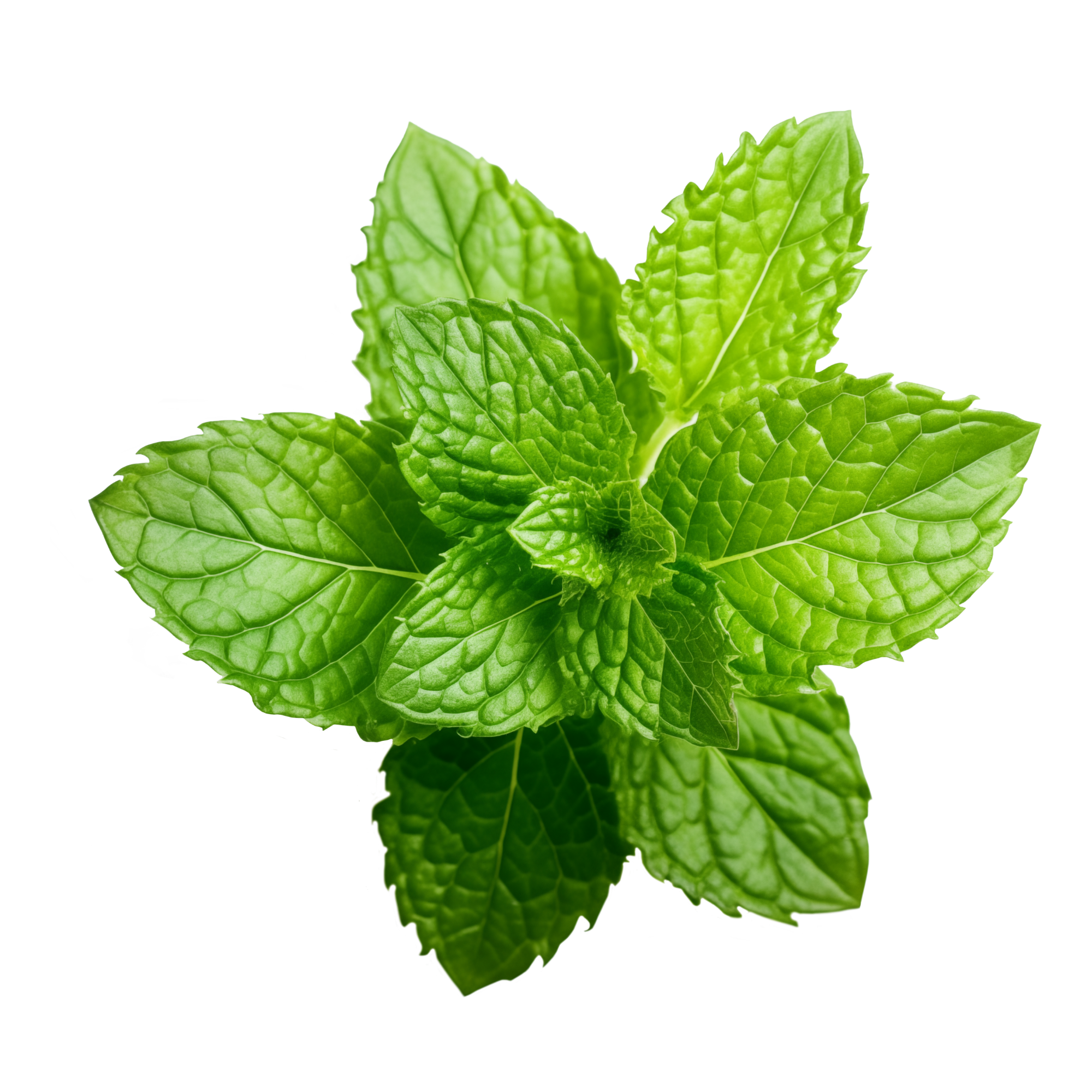
Another important factor in extract quality is the correct harvest time. For example, mint extracts will be different depending on whether they were extracted before or after the plants have flowered. Technically, mint can be harvested as soon as it has ready maturing leaves. However, after flowering the plant decreases the amount of energy spent to concentrate on the flowers so the concentration of cosmetically interesting chemical compounds will be lower. As another example, turmeric grows in areas with no distinct seasons, so the only challenge is getting the timing of the harvest just right. It needs to be harvested when the plant is really mature but hasn’t died back yet. It’s up to suppliers to test the chemistry of plants at different points in their life cycle to figure out the optimal harvest times. Plants have optimized their output for their own life cycle and it’s up to us to fit in it to help ourselves to the chemical compounds we’ve found useful.
The growers know when to best extract their plants for the compounds they are after. It might not be clear for the buyers, though, especially with increasing demand for extracts just for the label claim driving increasing demand and sometimes resulting in the offering of poorer quality materials.
Climate change is also impacting plants and thus the extraction. Continuing with the same mint example, it has become so hot in India that mint needs to be harvested earlier if we want to keep the same high concentration of active compounds like menthol. We need to remember that plants are producing the chemical compounds we’re interested in for their own protection, so when the environment changes, the chemical output also changes.
Both wild harvested and commercially grown extracts are used, when possible with a preference to sustainably managed farming. There can of course be differences in the chemical composition of wild and commercial varieties of plants. The growers take this into account and select for the varieties that mimic what a wild plant would provide. There is a lot of emphasis on the grower selecting the right strain or cultivar of plant. In this way, lack of information on the exact plant variety and growing method should be a red flag.
The quality control of extracts is incredibly complex. For brands, good ingredient suppliers will be able to provide a lot of details on the provenance, growing, harvest and extraction of the plants.
It’s worth being careful with well-known or well-regarded extracts like sandalwood, because often brands just want to claim the presence of the extract for the aura of high quality and potential effect without having done their due diligence in actual quality control. Equally, sometimes more expensive plant extracts are used in miniscule quantities just to claim their presence, we call that fairy dusting.
The challenges of supply, demand and sustainability
Tuning the production quantities of synthetic ingredients is relatively easier to manage than increasing the output of botanical extracts. Nature is not as amenable to quick adjustments and while people do often want to just naturally grow botanicals, it’s not always that simple. This is also where new opportunities lie, for example altering the growing methodology, like opting for vertical farming or fermentation which can be done in controlled climates indoors. Vertical or hydroponic farming usually works best for leaf material. Dealing with rhizomes that grow inside soil like licorice is more complicated.
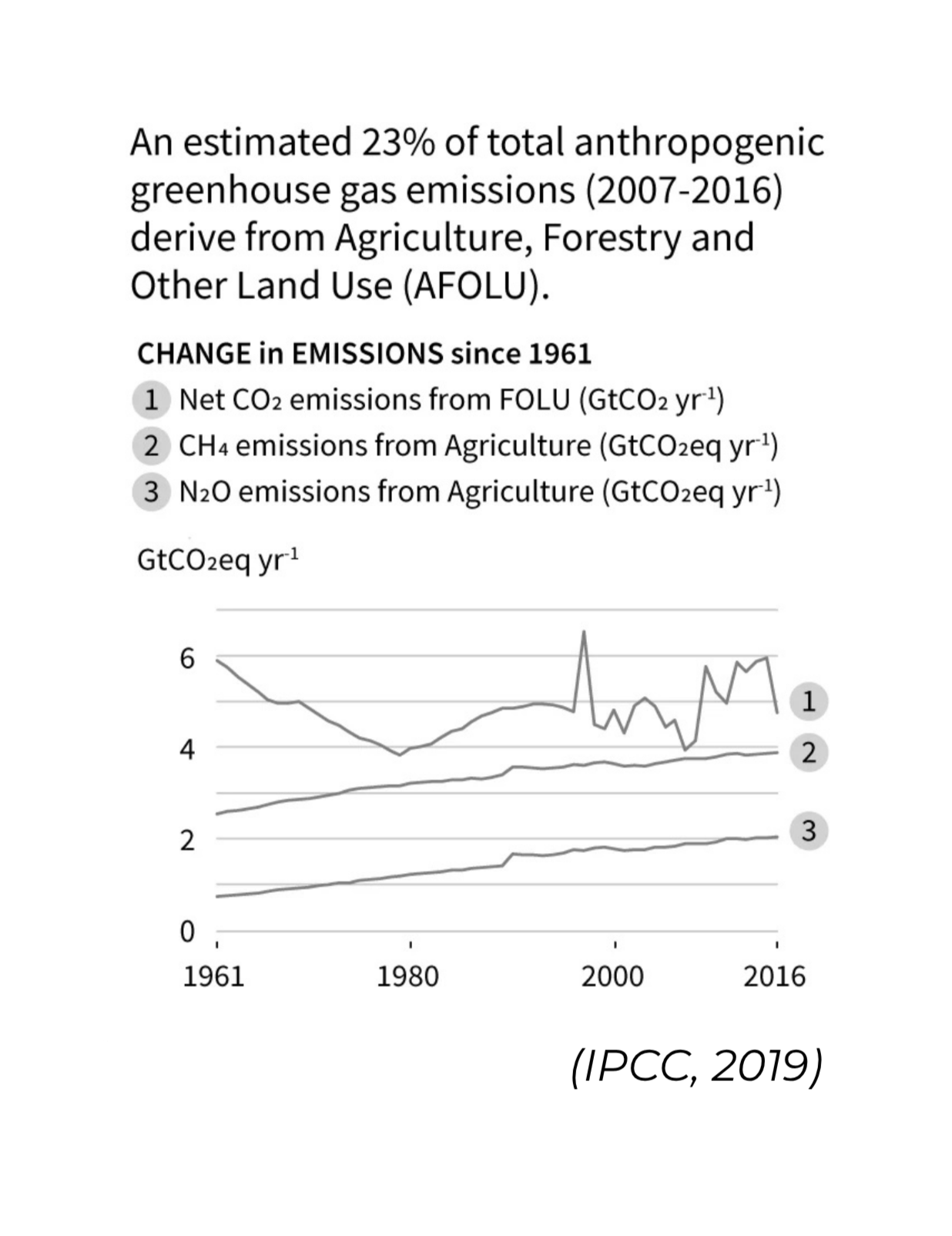
Natural doesn’t necessarily mean better for the environment. There is an intrinsic tension when it comes to cultivating plants for non-food purposes that may compete with food crops in terms of soil real estate. We have a big population to feed, which takes a lot of land. The expansion of agriculture is one of the largest threats towards biodiversity loss (IPBES, 2019). It’s also a big threat for climate change (IPCC, 2019). There are a lot of scientists and farmers working on this problem to more sustainably feed the world. This is a huge topic outside of the scope of this blog post. In the end, using plants for the sole purpose of producing non-food products should be questioned.
Growing plants naturally comes with a variety of supply issues. This is particularly true as demand starts to rise. For example, there is more licorice eaten and used than there is grown, indicating a problem of adulteration for licorice on the market. This means it’s important for beauty brands to really investigate their licorice extract suppliers. Legitimate licorice extract suppliers should be able to show exactly which sources their material is coming from and which sustainability practices they have in place. Properly documented raw materials are often more costly. However, since licorice can be commercially grown, this supply issue can be solved within a few years as growers can increase the size of their fields.
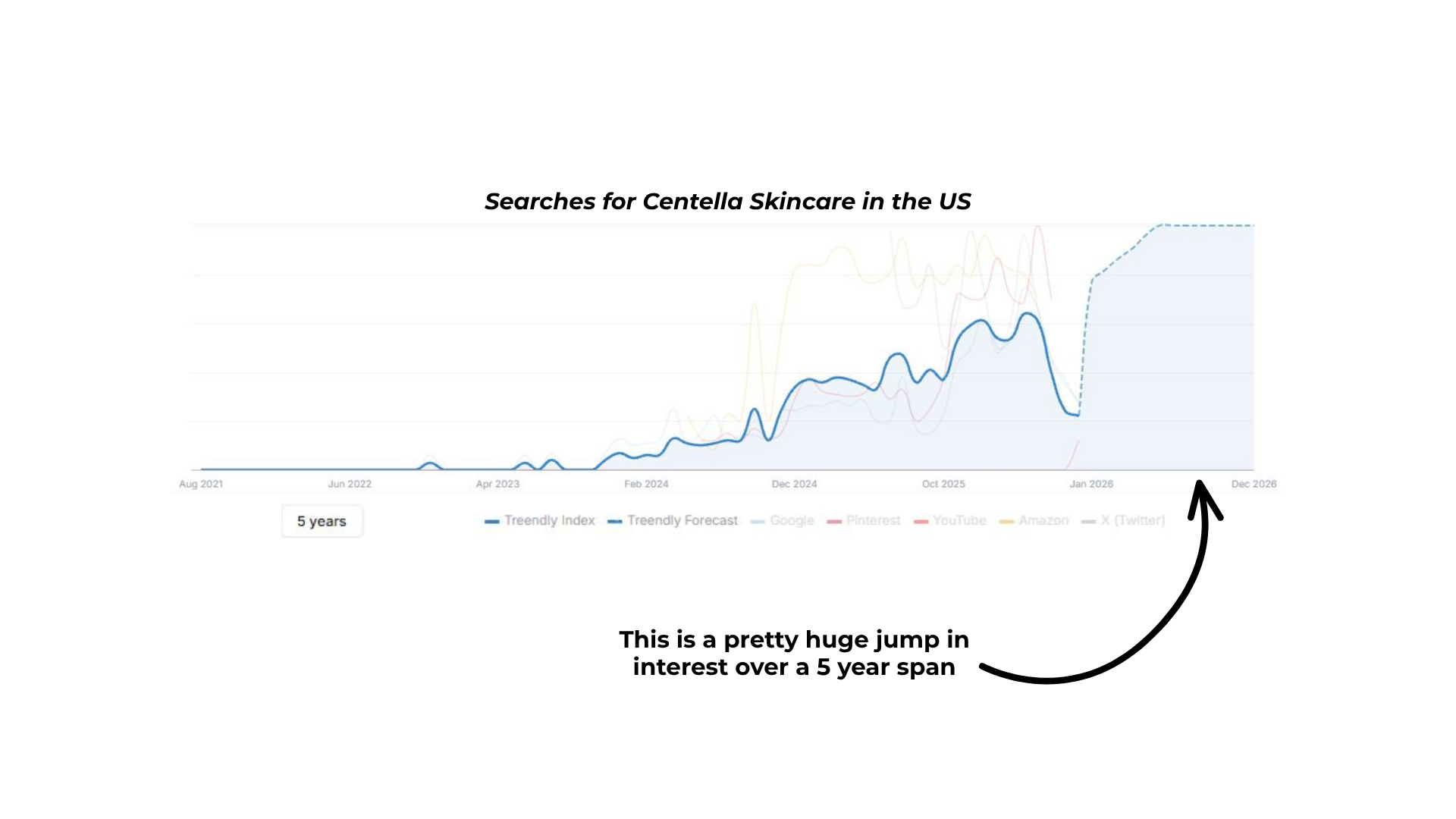
On the other hand, increasing the variety of crops is good for biodiversity. In addition, the use of certain botanical extracts can uplift entire communities. A major obstacle in keeping things more sustainable is our collective want for an excess of fast-moving consumer goods, like cosmetics but also fast fashion and processed foods. For example, when a hot new extract becomes popular, cosmetic brands often jump on the opportunity to capitalize on the interest by including it in their formulas. These sudden demand jumps can create a lot of strain on ecosystems, especially when the supply infrastructures aren’t ready.
There are many opportunities out there to supply obstacles; at least in-part. For example, waste products from the food industry may create more sustainable starting ingredients for cosmetics-related raw materials, including extracts. Another possible improvement for lands already lost to commercial farming would be encouraging interplantation of different species to reduce the prevalence of monocultures. Similar challenges are ahead for any investments in new botanicals. We need to be very careful with how we structure any new projects to avoid increasing deforestation and decreasing biodiversity. Avoiding exploitation and sincerely uplifting the local societies and economies should equally be a priority.
Professor Simmonds has for example been part of projects looking to use waste grape and apple seeds, waste from the avocado industry, waste from nuts and so on. As there is more demand for this more sustainable sourcing, these projects become more and more viable. Even grape skins can be useful since this is where many of the active ingredients are stored. Using waste from one industry can be the starting material for another industry and maximises the use of the plant.
Comparison of commercial farming and wild harvesting.
The key environmental issues are largely the same.
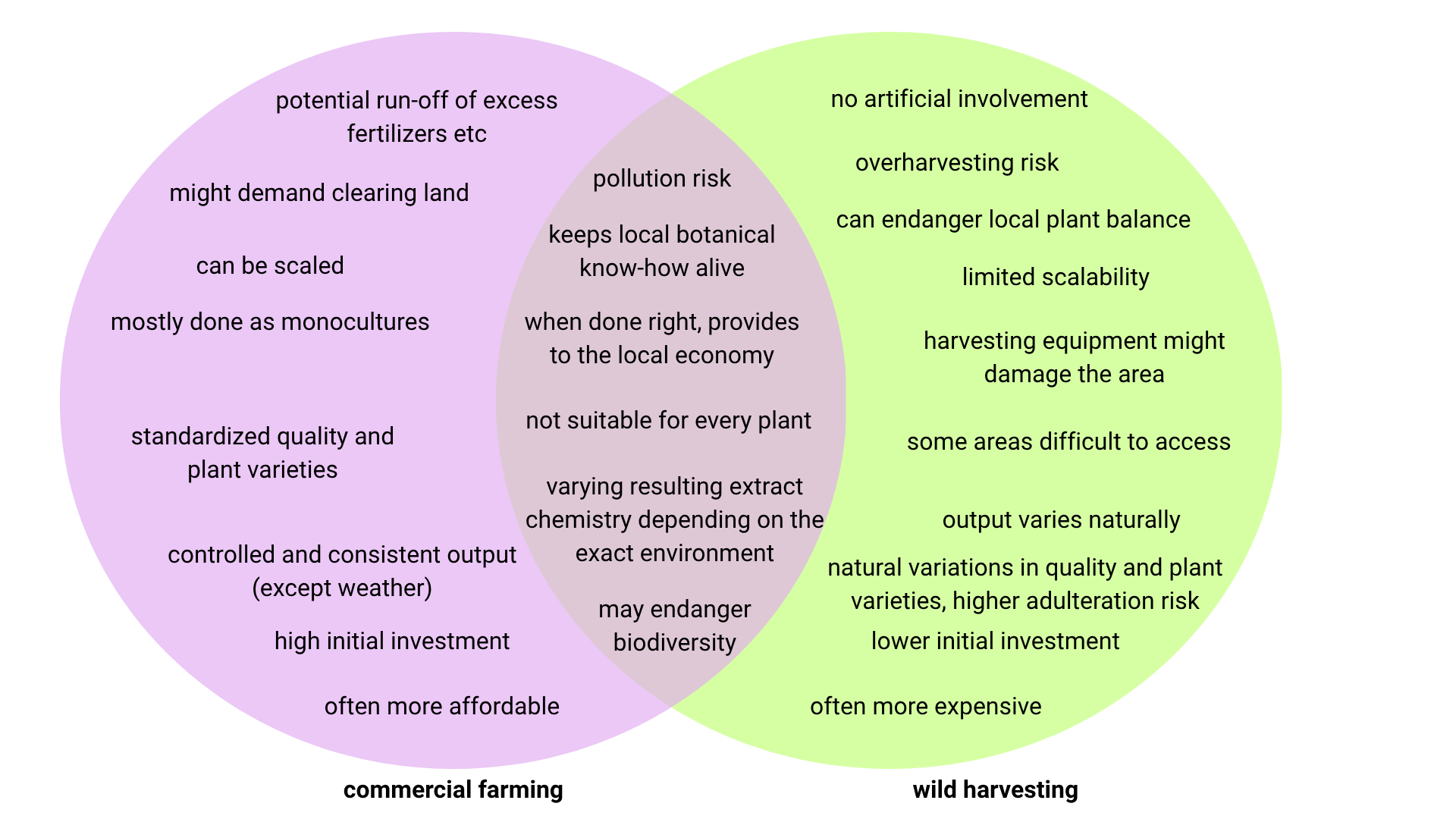
While wild harvested extracts often come with higher price tags, it doesn’t necessarily mean that their chemical composition is better or more interesting for cosmetic use. On the other hand, wild harvesting does impact the local ecosystems and certain areas have definitely been negatively impacted by the growing and harvesting of different plants. For certain botanicals in certain areas, there may be risks of bringing on desertification or other consequences of improper management and overharvesting. Human involvement in many cases has replaced the natural biodiversity of plants.
The elephant in the room is that no scientific, botanical or farming innovation alone will be enough. We have an overconsumption issue. Coupled with our desire for affordability, this is creating an untenable scenario for nature to keep up with. Very generally, controlled commercial farming supporting the local economies is preferable for plants interesting to the cosmetic industry. Controlling more of the growing parameters (like avoiding monocultures, growing optimal plant varieties, etc) has more benefits than drawbacks and the supply chain transparency is generally better.
Adulteration of Extracts
Demand for extracts is globally increasing. While this is good for business and to share the knowledge of traditional uses of plants, it unfortunately also comes with an increase in adulterated materials.
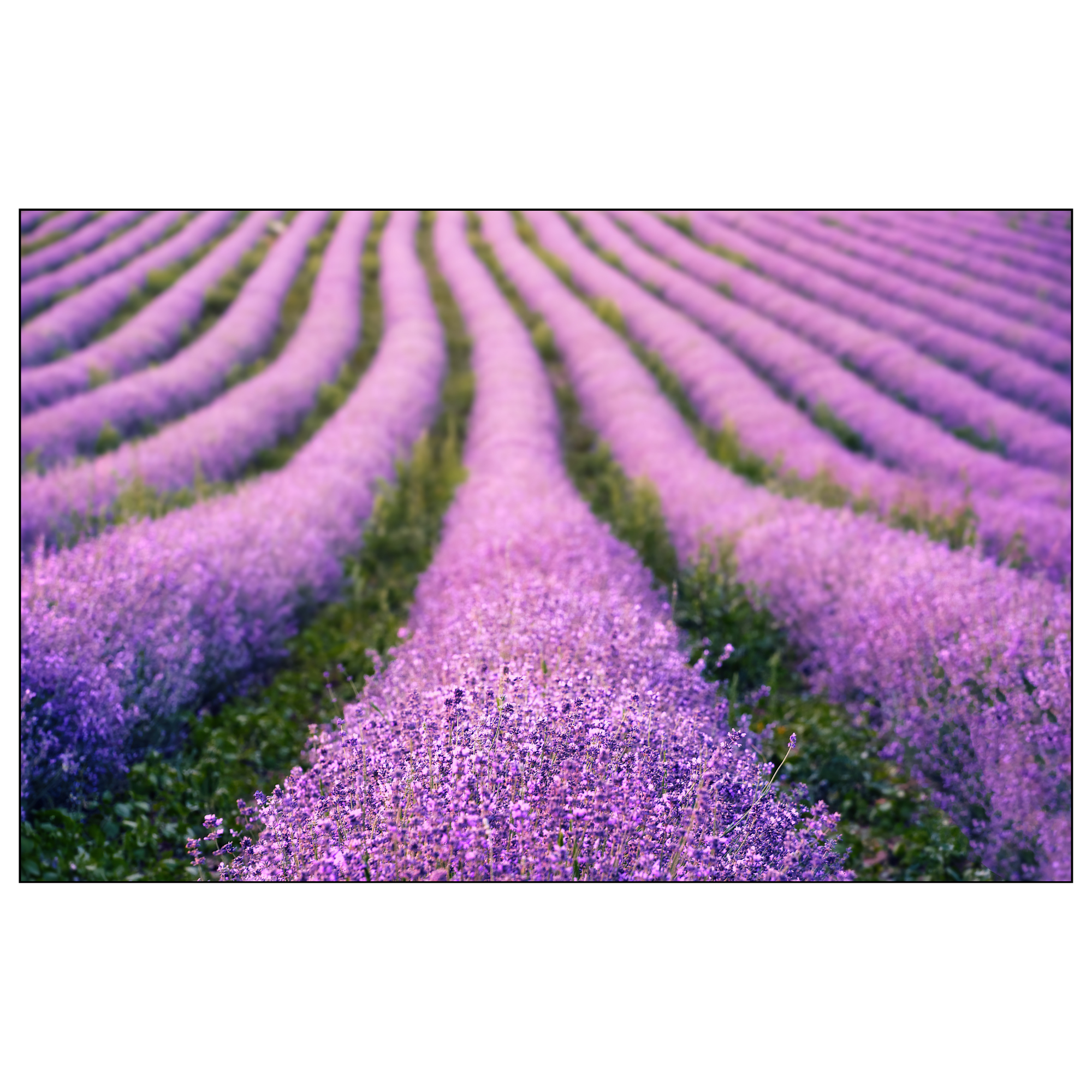
Aloe vera, for example, can be adulterated with higher concentrations of sugars than it naturally contains. As pressure is higher to deliver on extracts of some endangered plants, the probability of adulteration goes up for materials such as frankincense and sandalwood. Sometimes common extracts like lavender are adulterated, too. There are different varieties of lavender, and instead of using the high-quality essential oil varieties like the English or the French lavender, growers use commercial hybrids.
Investigating the effect of different extract constituents
Some of the knowledge on plant extracts and their constituents for use in cosmetics is historic, going back to the days of Cleopatra. Many areas like Egypt, Syria, China, India, have written documented history of use of their plants going back thousands of years. For regions that had less written knowledge sharing traditions, such as South America and the Americas, we don’t have as much of a historical record. Some knowledge has been lost through the ages of moving out of rural areas and losing touch with nature. The knowledge we’ve been left with has largely determined which plants get used more.

The other factor driving extract use is the knowledge we continue to gain. There are now companies looking for certain functionalities with a range of different screening methods. They evaluate antioxidants, moisturizing and anti-inflammatory properties, effect on skin tone and so on. There is a whole array of testing methods available that are also used in finalized cosmetic product testing. To identify a new botanical lead a company will get an extract from the selected plant and test the plant material, for say an antioxidant activity. Then they would fractionate the extract so that the compounds in the extract are separated. These fractions are then tested and the fraction with the most active is investigated to see what the active compounds are. The different compounds in the fraction are identified using different methods including liquid chromatography techniques. This is a relatively simplified example. Often, there are multiple active ingredients in one plant extract that lead to a positive cosmetic effect, which is why we’re motivated to use plants in the first place. Now the company knows the active constituents in the chosen plant extract and can use this knowledge for future quality control of new raw materials.
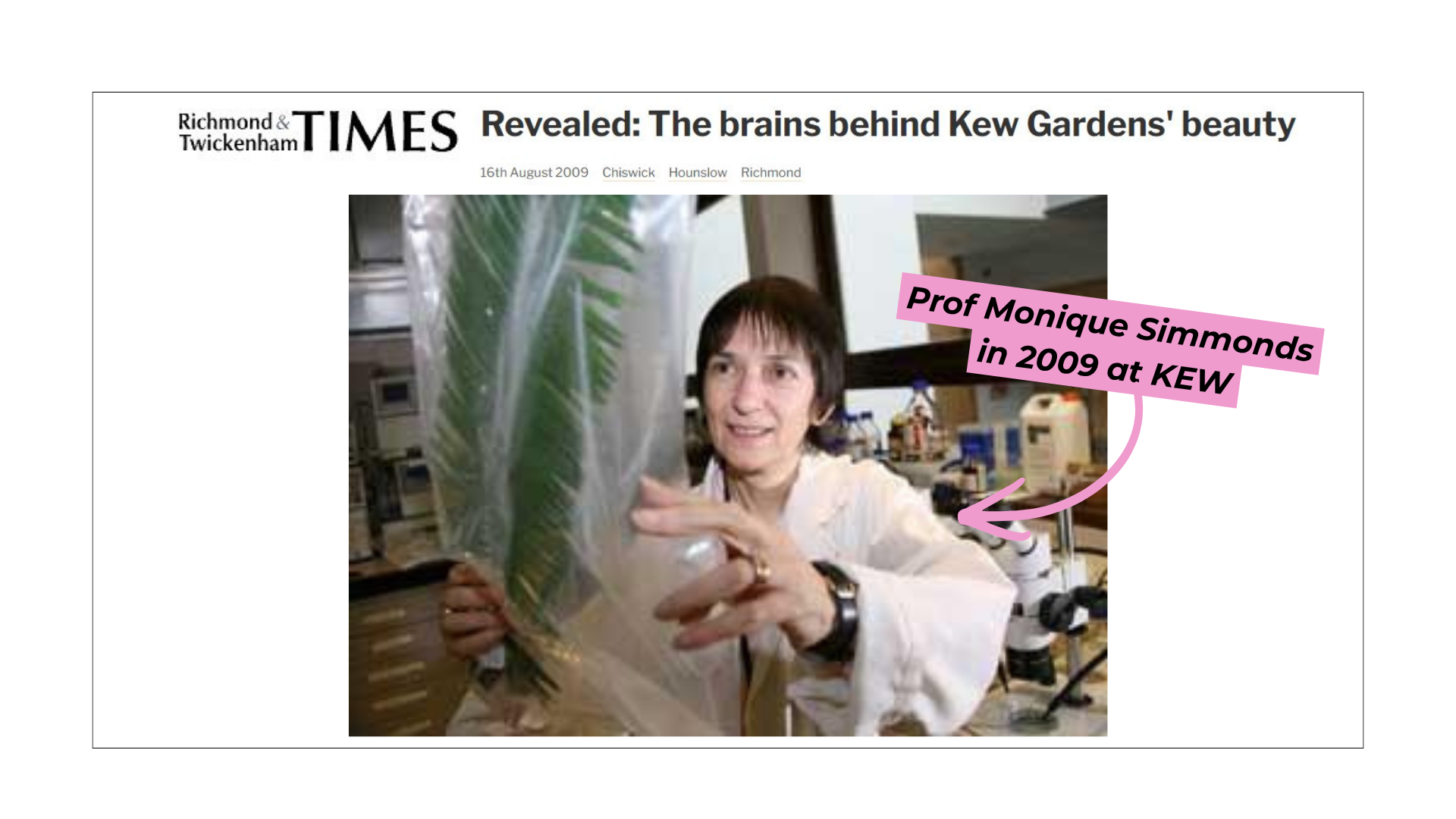
Quality of extract science
A good supplier of botanical extracts will be able to provide the analytical data to support their biological or cosmetic claims. They often order independent third-party reports on their materials from experts on specific testing. As with all scientific literature, the research articles pertaining to the potential uses of plant extracts need to be carefully assessed. As an extract becomes more popular, research may be done by newcomers to the space who may or may not get all the crucial details right.
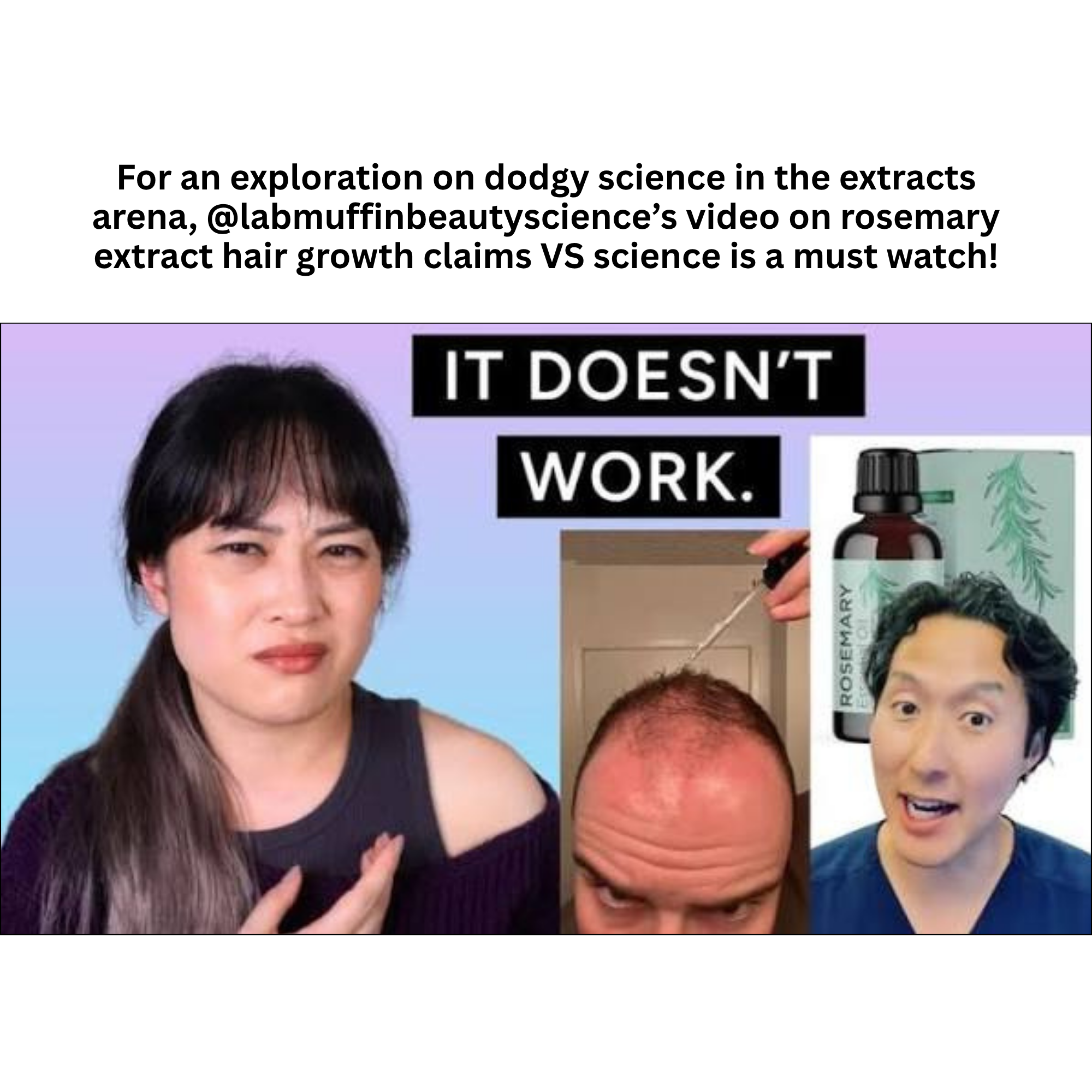
Find the blog + videio here: https://labmuffin.com/does-rosemary-oil-work-for-hair-growth-the-science/
When looking at research papers, the first clues to research quality come from the use of the correct (Latin) name for the plant, the chemical fingerprint of the extract, the supplier of the plant material and any voucher materials (authenticated official scientific reference materials) they’ve used. While a botanist isn’t always the best person to assess the robustness of cosmetic functions like antioxidant data, they definitely can assess the level of scrutiny the plant material has been put under. For any medicinal effects, the authors should be comparing the extract to synthetic drugs. Compared to very pure synthetic chemicals, plant materials are far more complex, so there may be some blind spots for researchers not used to validating the composition of botanicals. Fundamentally, they need to be sure they’re testing the chemicals they think they are because this is the biggest risk for unintentionally creating bad science. Thus, collaborating with experienced botanists is essential for any new projects.
While it’s complicated to research natural ingredients, it remains a worthy endeavor.
Identifying new botanicals and assessing their safety
Depending on the size and funding of the company, cosmetic ingredient suppliers may work with an academic at a university or an extract supplier to help them evaluate a new plant extract. Different layers of collaboration and data sharing can happen within different companies with specific expertise and tight NDAs or other agreements.
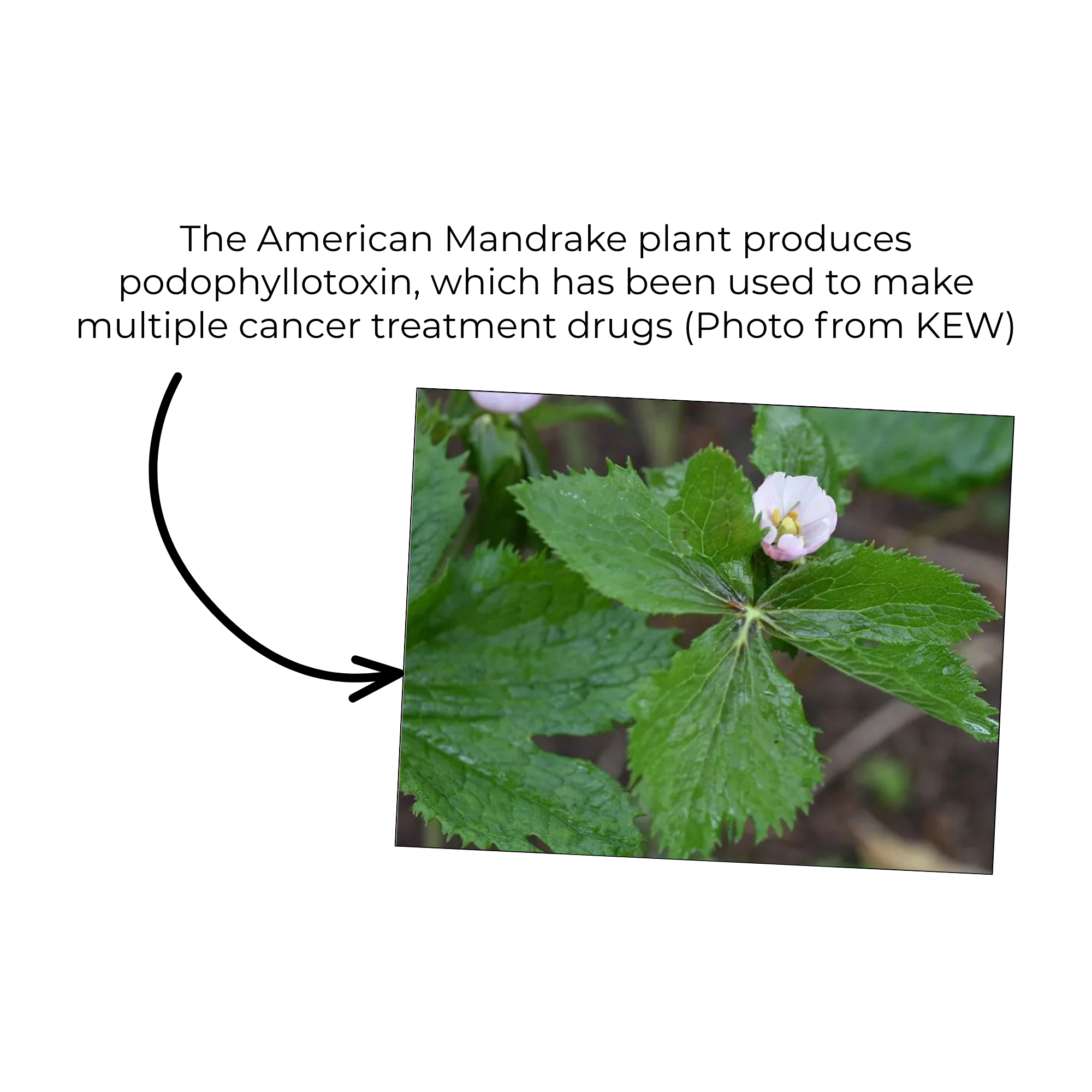
It’s difficult to test everything so at times companies rely on literature surveys to evaluate previous reports of toxicity associated with the plant as a starting point of evaluating risk. Unfortunately, smaller companies often don’t have the resources for such extensive trials that may not result in a safely usable (cosmetic) ingredient.
It’s complex but not hopeless and curiously, 65% of our current anti-cancer drugs come from plants. For medicinal use, the safety investigations are often done at concentrations thousands of times higher than the material would be used in even drugs and much less cosmetics. As a consequence, the interpretation of data across different use cases isn’t always straightforward.
There is a need for some reflection on testing concentrations so that we aren’t unnecessarily guiding researchers and companies away from potentially useful plants.
Companies also use expert extraction partners to help with developing know-how on less investigated species. There is no clear path to new discoveries and often we’re left working on plants we already know because there already is some data to guide us.
It’s fundamental that the same kind of care for safety is taken on natural materials as it is on synthetics. As we’ve seen, natural materials are highly complex, which leads to even more due diligence to determine safe use.
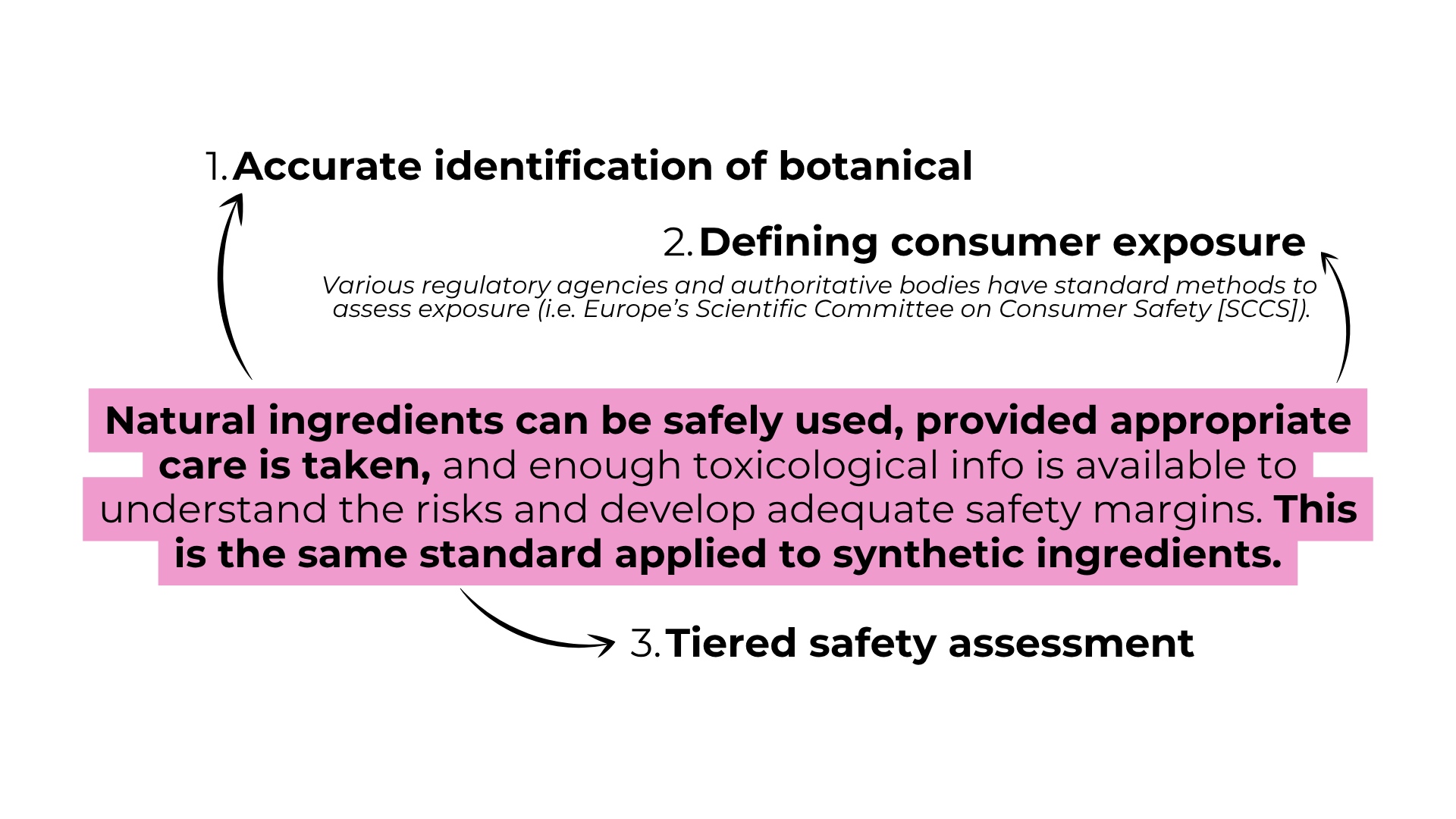
Professor Simmonds has worked with P&G and others to increase the public knowledge of the need for appropriate safety assessment of natural materials and to highlight their complexity. Every project is a collaboration of botanists, specialist extractors, analytical chemists and toxicologists. Testing natural materials is fundamentally different and more complex than testing pure synthetic materials. It’s important that the brands know which questions to ask from their suppliers and know that there may be potential challenges. It’s also good to know for the suppliers that clients are more likely to take them seriously if they’ve done the proper analyses on their extracts.
Truth about the INCI
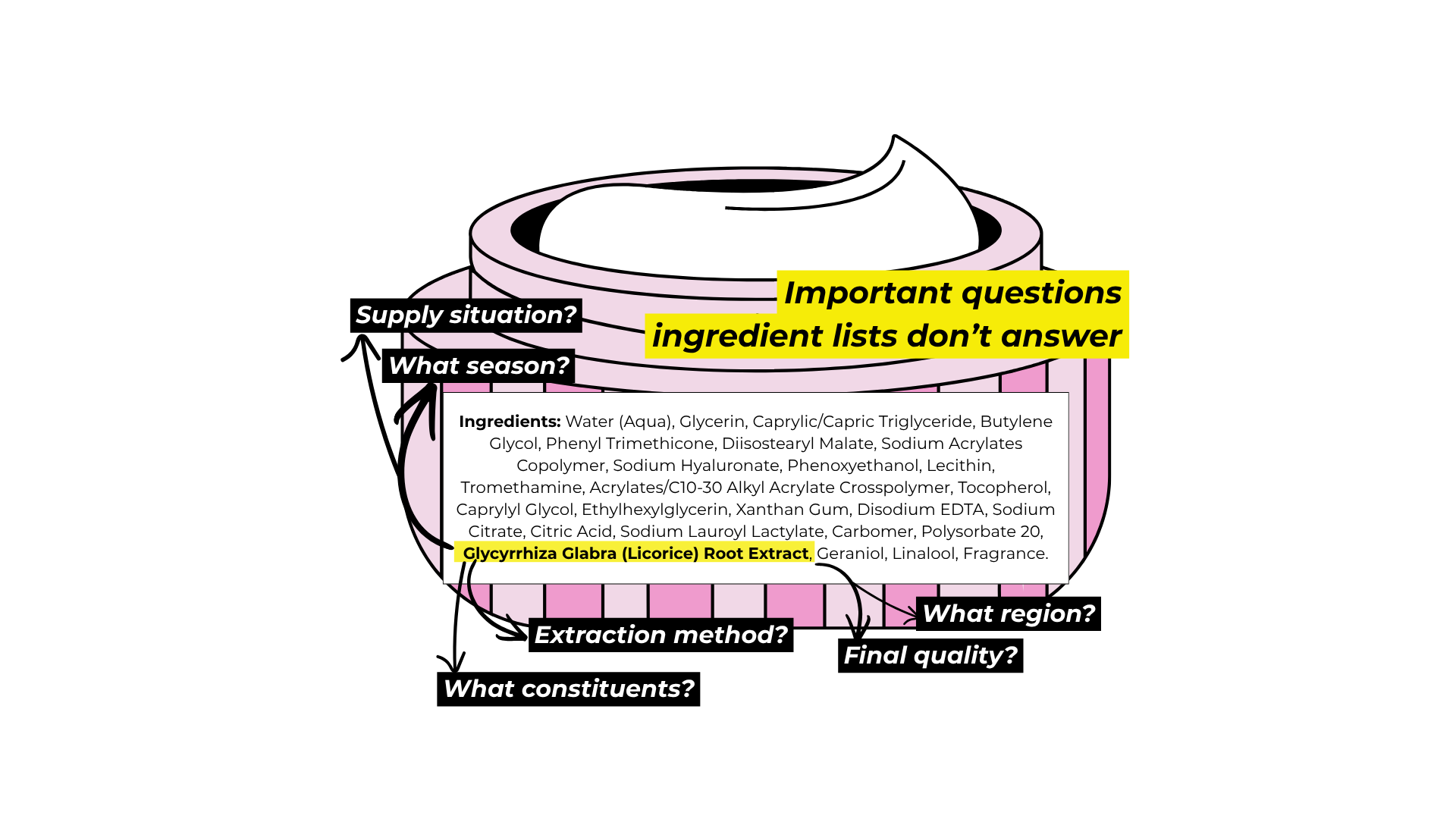
The biggest challenge to the formulator and the consumer is that the ingredient listing on the back of the cosmetic packaging is general. Its goal is to inform about the key ingredients and the presence of any potential allergens. With extracts, ingredient lists can often include just the common name of the plant, like sandalwood, when it more botanically accurately could be saying ‘santalum album’. There are over 104 different species covered by the word ‘sandalwood’. INCIs can be good starting points for people to examine and ask questions about the product or the plants used, but they really just brush the surface.
Sometimes, the ingredient listing will include details like the part of the plant used in the extract (ex: Glycyrrhiza uralensis root extract), but not always. Harvest time for example is never associated with a specific INCI name. This is where transparency of data and sourcing becomes extremely important, starting from the plant farmer, to the extractor, to the raw material supplier, to the formulator, to the brand, and finally to the consumer. Lots of information could get lost in this chain.
Allergens in extracts
Allergens are very common in natural ingredients. If you are someone with a skin allergy problem, the first step is to try to sort out which plant you’re allergic to. Respiratory and dermal allergies are associated with different types of chemistry. Different regions have different regulations on disclosing a varying number of fragrance allergens. From the summer of 2026, all new cosmetic products in the EU have to mention the presence of 82 potential allergens, up from the previous 26. The ingredient lists of products already on the market have to be updated by 2028.
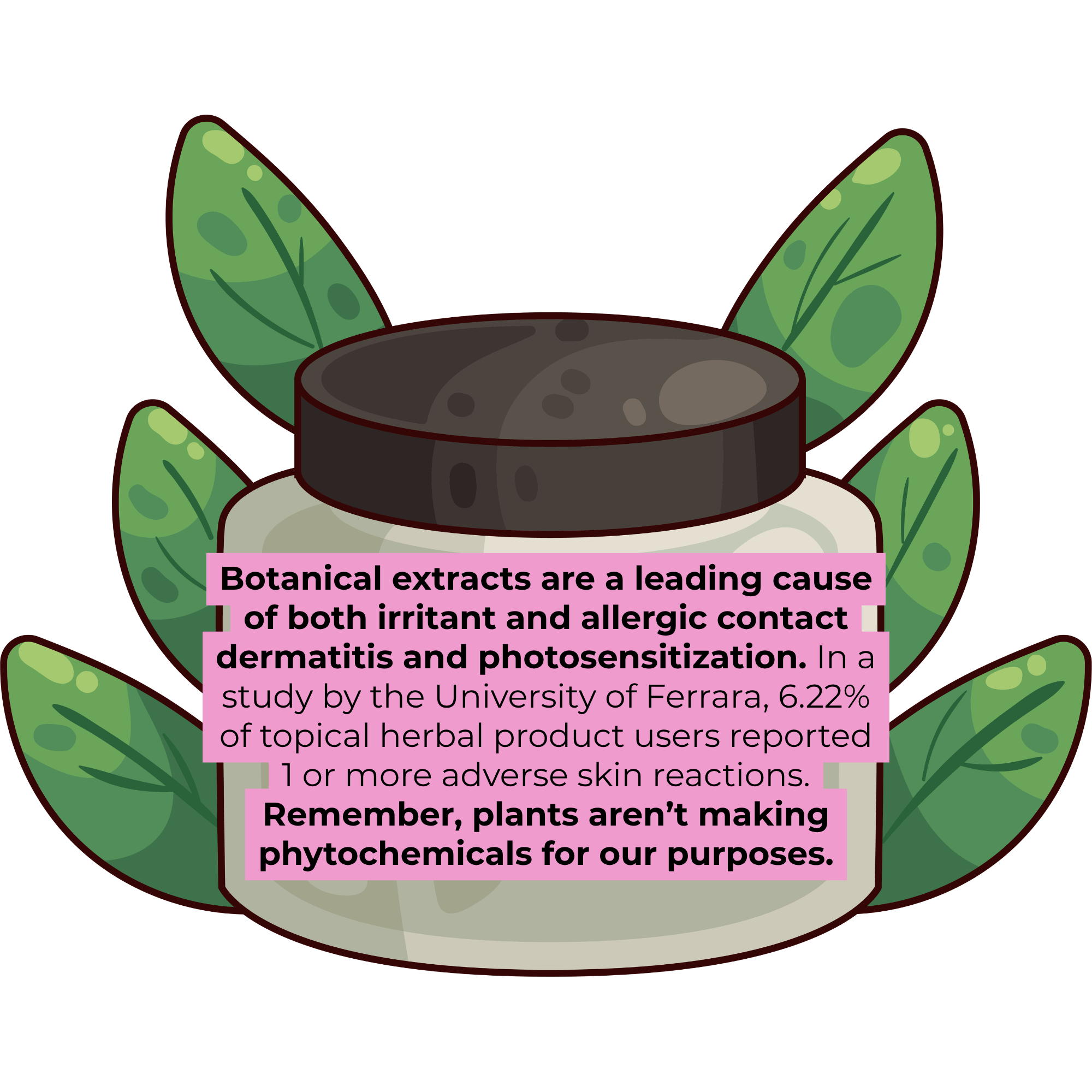
A big challenge in finding what plants are problems to you is the cross-over of certain plant chemicals across a myriad of plants. For example, limonene is a common constituent in many plant extracts and essential oils, and is also a common skin allergen. People who are allergic to lavender, may be allergic to linalool or coumarin, the first of which is also present in mint and the latter in tonka beans. Thus, if you’re allergic to certain plants, it may be interesting to look into their chemistry to figure out what else could potentially cause issues.
In general, cosmetics brands are quite responsive to issues of potential allergies as a large number of reported allergic reactions would lead to removing the product from the market, not to mention potential lawsuits.
Conclusion
While the chemical and cosmetic industries often face very public criticism for different farming or harvesting practices, they have also been leading the charge on using waste products from the food industry, for example. The public reaction may often seem disproportionate compared to the impact of other industries but this hasn’t stopped the progress towards more sustainable sourcing so far.
Fundamentally, we are using less variety of plants even for food in our daily lives now than we used to and any increase in plant diversity is a positive step. Of course someone interested in plants is going to be a bit biased, but professor Simmonds is convinced that the use of botanical extracts in cosmetics is a net good thing, increasing biodiversity. Additionally, finding new uses for plants allows us to search for or re-invent the traditional uses of the plants and support local societies and economies.
More funding for diversified plant projects would also allow for strictly monitored protection of nature. Even the extreme events associated with climate change are fundamentally due to the misuse of natural resources, so we need to try and correct this, starting with increasing biodiversity. Additionally, we can look to nature for inspiration on how to replace ingredients or production processes that are currently too energy- or resource-heavy. There are also interesting opportunities in the worlds of fungi and fermentation left to be explored. Professor Simmonds is convinced that while we’re facing incredible scientific challenges, they’re not beyond hope and that the answers may lie in past practices combined with modern know-how.
Thank you to Annika for writing this summary! For loads more, check out the full podcast episode associated with this blog!
Thank you also to Colonial Chemical for sponsoring this blog post so we could pay Annika for her time creating this!